
Where to Take CPR Classes in Washington DC
Washington DC is a city that never stops. From the bustling corridors of Capitol Hill to the high-energy neighborhoods of DuPont Circle and the Navy Yard, the capital is a hub of activity. In such a vibrant environment, being prepared for a medical emergency isn’t just a good idea, it’s a responsibility. Whether you’re a healthcare professional working in one of DC’s world-class hospitals or a parent wanting to keep your family safe, finding the right training is the first step.
Getting certified in CPR (Cardiopulmonary Resuscitation) is one of the most impactful things you can do for your community. If you are searching for the best local training options in the District, look no further. We have compiled a comprehensive look at what makes CPR training in Washington DC unique and how you can get certified efficiently.
Why is Washington DC a prime location for CPR training?
Washington DC is unique because of its high density of both healthcare facilities and federal agencies. Many professionals moving to the city for work find that CPR certification is a mandatory requirement for their positions. This high demand has resulted in a robust local infrastructure for emergency training.
Local training centers in DC are tailored to the urban lifestyle. They offer:
- Proximity to Public Transit: Most training centers are located near Metro stops like Union Station, Gallery Place, or Foggy Bottom, making it easy to fit a class into a busy commute.
- Diverse Course Options: Because the city serves everyone from high-level government officials to elementary school teachers, classes are tiered to meet different professional needs.
- High Standards: Training in the capital often aligns with the highest international standards, ensuring your certification is recognized nationwide.
What certification levels are available through CPR Classes Near Me?
When you look for training in Washington DC, you will notice that not all CPR classes are the same. “CPR Classes Near Me” offers a variety of levels to ensure you get exactly the training you need for your specific situation.
- AHA BLS for Healthcare Providers: This is the gold standard for doctors, nurses, and paramedics. It covers multi-rescuer CPR and advanced techniques.
- Heartsaver® First Aid CPR AED: Designed for laypeople, such as teachers, fitness trainers, and corporate employees. It covers the basics of CPR and how to use an AED machine.
- Bloodborne Pathogens: Often required for those in childcare or industrial work, this course focuses on safety and cleanup in medical situations.
- Pediatric CPR: Focused specifically on infants and children, this is a must for new parents and childcare workers in the DC area.
How do you choose between AHA and Red Cross curricula?
A common question among those seeking “CPR Classes Near Me Washington DC” is whether to choose an American Heart Association (AHA) course or a Red Cross course. Both are respected, but there are subtle differences to consider.
- Employer Requirements: Many hospitals and clinical settings in DC specifically require an AHA certification. It is always best to check with your manager first.
- Content Focus: AHA courses tend to have a heavy focus on the science and technical precision of chest compressions. Red Cross courses are often lauded for their practical, scenario-based approach.
- Recognition: Both are recognized across the United States, but AHA is frequently viewed as the primary standard-setter for CPR techniques used globally.
Where are the best training sites located within the DC Metro area?
Geography matters in a city with traffic as legendary as DC’s. “CPR Classes Near Me” focuses on providing training options in convenient neighborhoods to save you time.
You can find sessions in:
- Downtown / K Street: Ideal for office workers who want to take a class after the workday or during a long lunch break.
- Georgetown: A hub for university students and residential families who prefer a more local setting.
- Capitol Hill: Serving the legislative community and surrounding residential areas.
- Adams Morgan / Woodley Park: Convenient for those living in the more residential parts of the District.
By choosing a site close to your home or office, you remove the barrier of travel and make it much easier to keep your certification current.
What should you expect during your Washington DC CPR training session?
If you have never taken a CPR class before, you might feel a bit nervous. However, classes are designed to be encouraging and interactive.
Here is a typical walkthrough of what a session looks like:
- Instructional Videos: Most classes start with a visual guide provided by the governing health body to set the foundation.
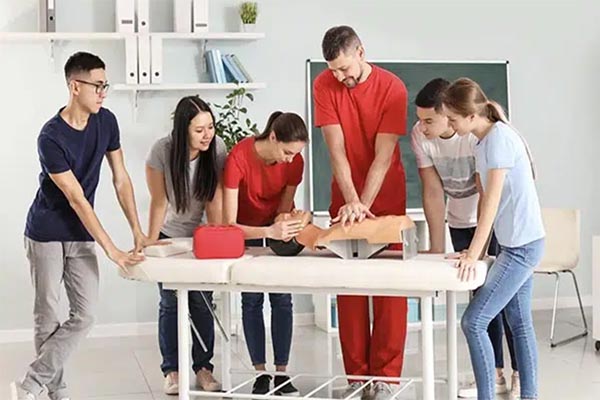
- Hands-on Practice: You will spend the majority of your time working with a high-fidelity manikin. This is where you learn the feel of the correct depth and rhythm for chest compressions.
- AED Familiarization: You will practice using a trainer AED (which does not deliver a real shock) to understand the voice prompts and pad placement.
- Skill Testing: Toward the end of the class, the instructor will watch you perform the skills you’ve learned to ensure you are ready to use them in the real world.
- Written Exam: For some certifications, a short multiple-choice test is required to ensure you understand the concepts.
Is BLS different from standard Heartsaver CPR?
Yes, and this is a critical distinction for DC residents to understand. While both teach the fundamental skill of chest compressions, they serve different purposes.
Heartsaver CPR is intended for the general public. It covers:
- Adult, child, and infant CPR.
- AED usage.
- Choking relief.
BLS (Basic Life Support) is for healthcare professionals. It includes everything in Heartsaver plus:
- Two-person rescue techniques.
- Bag-valve mask (BVM) usage.
- Advanced airway support concepts.
- Critical thinking during a cardiac arrest team effort.
If you are a student at George Washington University or working at MedStar Washington Hospital Center, you almost certainly need BLS.
Can groups or businesses get private onsite CPR training in DC?
Absolutely. Many DC-based businesses, law firms, and NGOs prefer that our instructors come to them. Onsite training is an excellent way to ensure your entire team is compliant with OSHA safety regulations without requiring them to commute to a separate facility.
Benefits of onsite training include:
- Convenience: We bring the equipment like manikins, AED trainers, and workbooks directly to your conference room.
- Customization: We can tailor scenarios to your specific workplace layout.
- Team Building: Learning life-saving skills together builds confidence and a sense of shared responsibility among staff.
How do you keep your certification current once you’ve completed training?
CPR certifications typically expire every two years. In a city as fast-paced as Washington DC, it’s easy to let that date slip by.
To maintain your status:
- Set a Reminder: Put a notification in your digital calendar for 22 months after your class date.
- Take a Renewal Course: Renewal courses are often shorter than initial certification courses because they skip the very basic introductory concepts.
- Stay Informed: AHA and Red Cross update their guidelines every few years. Even if your card is valid, reading up on the latest tweaks to compression ratios is a good practice.
Conclusion
Taking the time to get certified in CPR is one of the most proactive steps you can take as a resident of Washington DC. The city is full of opportunities to help others, and being equipped with the knowledge to respond in a crisis is invaluable. Whether you need certification for your job or simply for peace of mind, there is a local class ready to welcome you.
Ready to make a difference? Ensure your skills are up to date and your confidence is high by booking your next session with local experts who understand the unique needs of the DC community.
Get Your CPR Certification with CPR Classes Near Me Washington DC.
Frequently Asked Questions (FAQ)
Q: How long does a typical CPR class in Washington DC take?
A: Most CPR and First Aid classes last between 2 and 4 hours, depending on the level of certification. BLS classes for healthcare providers generally take about 4 hours, while a standard CPR/AED class for laypeople may be closer to 2 or 3 hours.
Q: Is my DC CPR certification valid in other states like Virginia or Maryland?
A: Yes. Because our classes are built on AHA or Red Cross standards, your certification is nationally recognized. If you move from DC to Arlington or Silver Spring, your card remains valid until its expiration date.
Q: Can I take a CPR class online?
A: While there are online portions available (Blended Learning), a full certification recognized by employers usually requires an in-person skills session. You can study the theory online, but you must demonstrate the physical skills to a certified instructor in Washington DC to receive your card.
Q: What should I wear to my CPR training session?
A: Wear comfortable clothing that allows you to move easily. You will be spending time on your knees practicing compressions on a manikin, so pants and closed-toe shoes are highly recommended over professional attire or skirts.
Q: Will I receive my certification card the same day?
A: Most classes offer digital e-cards which are often processed and sent to your email on the same business day or within 24 hours of completing the course and skills test.
Leave a Reply