
CPR Certification for Daycare Providers: Infant CPR and Choking Response
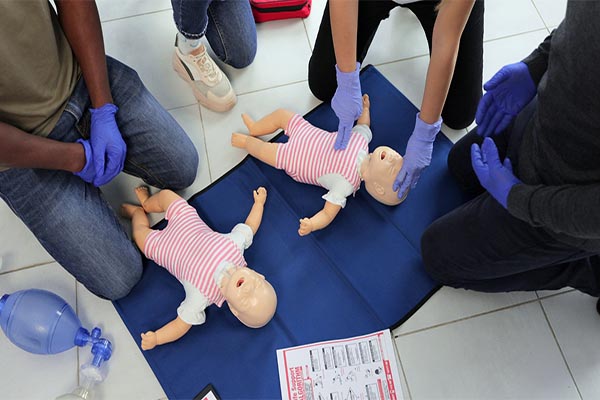
As a daycare provider, you are more than just a caregiver; you are a first responder in a high-stakes environment. Whether you are rocking a newborn to sleep or supervising a group of toddlers during snack time, the safety of these little ones rests squarely on your shoulders.
While we all hope for an emergency-free workday, the reality is that infants and toddlers are naturally curious and physically vulnerable. A small toy or a piece of fruit can become a life-threatening hazard in seconds. That is why CPR certification isn’t just a “nice-to-have” on your resume—it is a vital toolkit that saves lives.
In this guide, we will break down the latest 2026 standards for infant CPR and choking response, ensuring you have the confidence to act when every second counts.
Why is CPR certification required for daycare providers?
Safety is the foundation of the childcare industry. Most state licensing boards require every staff member to maintain a current CPR and First Aid certification to ensure a baseline level of preparedness across the facility.
- Legal Compliance: In many states, you cannot be left alone with children unless you are certified.
- Regulatory Standards: The Child Care and Development Block Grant (CCDBG) Act mandates health and safety training for providers receiving federal funds.
- Professional Credibility: Parents are much more likely to trust a center where every teacher displays a valid certification card.
- Immediate Response: Emergency Medical Services (EMS) can take several minutes to arrive; your immediate action is often the difference between a full recovery and a tragedy.
What are the 2026 AHA guidelines for infant CPR?
The American Heart Association (AHA) recently updated its guidelines to streamline the “Chain of Survival.” For daycare providers, the focus is on high-quality compressions and effective rescue breaths.
- Check the Scene and the Baby: Ensure the area is safe. Tap the infant’s foot and shout to check for responsiveness.
- Call 911: If you are alone with the infant, provide two minutes of CPR first, then call 911. If someone else is there, have them call immediately.
- Chest Compressions: Place two fingers in the center of the chest, just below the nipple line. Push down about 1.5 inches at a rate of 100-120 compressions per minute.
- Rescue Breaths: After 30 compressions, deliver two gentle rescue breaths. Cover the infant’s nose and mouth with your mouth to create a seal.
- Repeat: Continue the cycle of 30 compressions and two breaths until the infant starts breathing or professional help arrives.
How do you respond to a choking infant?
Choking is a leading cause of accidental death in children under the age of four. Because infants have smaller, more delicate internal organs, the “Heimlich Maneuver” (abdominal thrusts) used on adults can cause serious injury. Instead, the 2026 guidelines emphasize a combination of back blows and chest thrusts.
- Identify the obstruction: If the infant is coughing weakly or making high-pitched noises, they are choking. If they cannot cry or breathe, you must act.
- Positioning: Lay the infant face-down along your forearm, using your thigh for support. Keep their head lower than their chest.
- 5 Back Blows: Use the heel of your hand to give five firm blows between the shoulder blades.
- 5 Chest Thrusts: Turn the infant face-up on your other forearm. Use two fingers to give five quick chest thrusts (the same motion as CPR).
- Cycle: Repeat five blows and five thrusts until the object is expelled or the infant becomes unresponsive.
Why are abdominal thrusts dangerous for infants?
The 2026 updates have doubled down on the warning against abdominal thrusts for children under one year old. An infant’s liver and other organs are not yet fully protected by the ribcage. The force required to dislodge a foreign object via the abdomen could cause internal bleeding or organ damage. By using the back blow/chest thrust method, you provide the necessary pressure to clear the airway while protecting the baby’s midsection.
What is the difference between infant and child CPR?
While the goal—restoring oxygen flow—is the same, the technique changes as a child grows.
- Hand Placement: For infants, use two fingers. For children (age 1 to puberty), use one or two hands depending on the child’s size.
- Compression Depth: Aim for 1.5 inches for infants and about 2 inches for children.
- AED Use: Always use pediatric pads if available. If not, adult pads can be used on children, but ensure they do not touch each other on the chest.
How often should daycare workers renew their certification?
Most CPR certifications expire every two years. However, “skills decay” is a real phenomenon. Research shows that CPR skills can begin to decline as soon as six months after training.
Many high-quality daycare centers now encourage “refresher” sessions every year. Staying current ensures you are aware of the latest 2026 guideline changes, such as the unified Chain of Survival and updated choking protocols.
Can you get certified through online-only classes?
For daycare licensing, the answer is almost always no. While you can learn the “cognitive” or “lecture” portion of the class online, state boards require a hands-on skills assessment. You must demonstrate to a certified instructor that you can perform compressions at the correct depth and rate on a manikin.
“Blended learning” is the most popular option for busy daycare providers. You do the reading and videos at home, then spend an hour in a classroom for the physical testing.
How does CPR training build parent trust?
When a parent drops their child off at a daycare, they are handing over their most precious “possession.” Knowing that the staff is professionally trained in infant CPR provides immense peace of mind.
- Transparency: Displaying your staff’s up-to-date certificates in the lobby shows a commitment to excellence.
- Communication: Being able to explain your emergency protocols to parents during an initial tour can be the deciding factor for them choosing your center over a competitor.
- Safety Culture: A certified staff is more likely to be proactive about “choke-proofing” the classroom, identifying hazardous toys before an accident happens.
What should you look for in a CPR class?
Not all CPR classes are created equal. For daycare providers, ensure the course covers:
- Infant and Child CPR (Pediatric focus)
- Choking relief for all ages
- Hands-on manikin practice
- AED training
- Certification from a recognized body like the AHA or Red Cross
Conclusion
Becoming CPR certified is one of the most significant steps you can take in your professional development as a daycare provider. It transforms you from a supervisor into a lifesaver. By mastering the 2026 infant CPR and choking response techniques, you ensure that the children in your care are protected by the highest standards of modern medicine.
Don’t wait for an emergency to realize you aren’t prepared. Taking a few hours today can mean a lifetime of difference for a child in your care.
Contact CPR Classes Near Me today to find a convenient, hands-on certification course that meets your state’s licensing requirements and gives you the confidence to protect your “tiny charges.”
FAQ Section
Q: What is the age range for “Infant” CPR?
A: In the context of CPR training, an infant is defined as any child under the age of one year. Once a child reaches their first birthday, you follow “Child” CPR protocols.
Q: Should I do a “Blind Finger Sweep” if a baby is choking?
A: No. Never perform a blind finger sweep. You may accidentally push the object deeper into the airway. Only attempt to remove an object if you can clearly see it and easily reach it.
Q: What if the infant becomes unconscious while choking?
A: If the infant becomes unresponsive, stop the choking maneuvers immediately. Place them on a flat, firm surface and begin CPR starting with chest compressions. Every time you open the airway to give breaths, look for the object.
Q: Is an AED safe for a 6-month-old baby?
A: Yes. If an AED is available, it should be used. Use pediatric pads if available. If you only have adult pads, place one on the center of the chest and the other on the center of the back (sandwiching the heart) to ensure the pads do not touch.
Q: How long does a typical pediatric CPR class take?
A: A comprehensive Pediatric First Aid and CPR class usually takes between 3 to 4 hours for a full instructor-led session, or about 1 to 2 hours for a blended learning skills check.