
TL;DR: Can You Pass a CPR Class in DC?
Worried about the difficulty? Don’t be! Passing a CPR class in Washington DC is designed to be straightforward and stress-free.
- Competency-Based: The course focuses on life-saving skills, not complex medical theory.
- Supportive Environment: Instructors coach you through the physical steps until you’re confident.
- Manageable Exams: Written tests are intuitive, and practical assessments focus on simple muscle memory.
- Tailored to You: Whether you’re a healthcare pro or a local teacher, the class matches your specific needs.
Passing isn’t about being a medical expert, it’s about having the confidence to act.
Ready to get certified?
Get Your CPR Certification with CPR Classes Near Me Washington DC
Is Passing a CPR Class Hard in Washington DC? What You Need to Know
If you’re a professional in the nation’s capital, you know that time is your most valuable asset. Whether you are a teacher in Ward 3, a fitness instructor in DuPont Circle, or a nurse at a major DC hospital, your schedule is packed. When you find out you need a CPR certification, the first question that usually pops up is: “Is this going to be hard to pass?”
There is a common misconception that medical certifications are designed to “weed people out.” Many people envision a stern instructor with a stopwatch and a complex 100-page exam. In reality, the goal of CPR training in Washington DC is exactly the opposite. The mission is to ensure you feel confident enough to save a life.
In this guide, we’ll break down exactly what makes these classes manageable, what the testing process looks like, and why you don’t need a medical degree to pass with flying colors.
Is the CPR Exam Difficulty Level Overrated?
The short answer is yes. CPR classes are designed for competency, not for academic exclusion. The curriculums provided by organizations like the American Heart Association (AHA) are structured so that if you participate in the class, you are almost guaranteed to pass.
Most students find that the “difficulty” isn’t in the complexity of the information, but in the physical coordination required for chest compressions. Once you get the rhythm down, the rest follows a logical flow.
Here is why most people find it easier than expected:
- The steps are repetitive to build muscle memory.
- Instructors use real-world scenarios that make sense.
- The material is stripped of unnecessary medical jargon.
- You are encouraged to ask questions throughout the session.
What Kind of Topics Are Covered in the Curriculum?
To understand if a class is “hard,” you first need to look at what you are learning. A standard CPR class in Washington DC focuses on three primary pillars.
- High-Quality Compressions: Learning the correct depth and rate for adults, children, and infants.
- AED Usage: Understanding how to operate an Automated External Defibrillator safely.
- Rescue Breathing: Using pocket masks or bag-mask devices to provide oxygen.
Because the focus is on these core skills, you aren’t memorizing thousands of facts. You are mastering a specific sequence of actions. For most DC professionals, this practical approach is much easier to digest than a traditional classroom lecture.
How Does the Hands-On Skills Test Work?
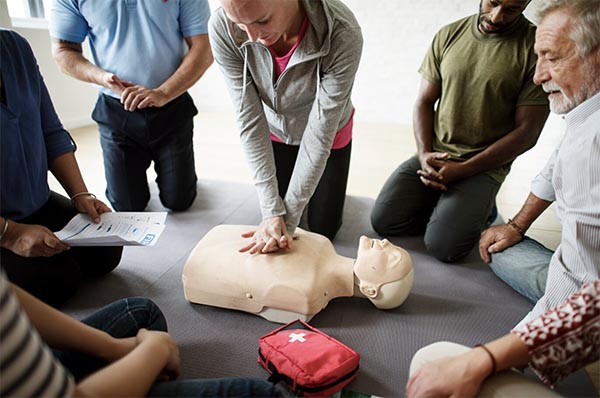
The practical assessment is often what makes students nervous, but it is actually the most helpful part of the class. In Washington DC, your instructor will watch you perform the skills on a manikin.
What you need to know about the skills test:
- It’s coaching-based: If you are pushing too shallowly, the instructor will tell you. You can correct it on the spot.
- Use of technology: Many manikins now have feedback devices that light up when you hit the right depth.
- No “trick” scenarios: The test scenarios are exactly what you practiced for hours during the class.
- Physicality over memory: It is more about getting your body used to the motion than it is about intense mental strain.
Is the Written Test Hard to Navigate?
If you choose a Basic Life Support (BLS) class or a standard Heartsaver course, there may be a written component. However, this is usually an open-resource or highly guided review.
The written test is designed to ensure you understand basic safety, such as:
- When to call 911 in the DC metro area.
- How to ensure the scene is safe before approaching.
- The correct ratio of compressions to breaths (30:2).
Most students finish the written portion in under 20 minutes. If you have been paying attention to the videos and the instructor’s demonstrations, the answers are usually very intuitive.
Why Do Some People Struggle With the Class?
While the pass rate is extremely high, some individuals do find certain aspects challenging. Identifying these early can help you prepare.
Common hurdles include:
- Physical Stamina: Doing two minutes of high-quality compressions is a workout! It requires leaning over a manikin and using your upper body strength.
- Overthinking the Steps: Sometimes students try to add complex medical steps they saw on TV. CPR is about simplicity.
- Test Anxiety: Nervousness can cause people to forget the 30:2 ratio momentarily, but instructors are there to help you reset.
What are the Requirements for DC Professionals?
In Washington DC, requirements vary by industry. Knowing exactly what you need can reduce the stress of picking the “wrong” class.
- Healthcare Providers: Usually require BLS (Basic Life Support). This is slightly more rigorous but still focuses on core competencies.
- Teachers and Coaches: Often require Heartsaver CPR and AED. This is very beginner-friendly.
- General Public: Usually take a non-certification or basic awareness course, which is purely informational.
By matching the right class level to your needs, you ensure the difficulty level matches your background knowledge.
How Can You Prepare for Success Before the Class?
You don’t need to study for weeks. However, doing a few small things can make your session at CPR Classes Near Me Washington DC even easier.
- Wear Comfortable Clothes: You will be on your knees on the floor working with manikins. Wear sneakers and flexible pants.
- Watch a Summary Video: Spend 5 minutes on a reputable site watching a “CPR Overview” video. Having a visual reference beforehand makes the live class click much faster.
- Hydrate: As mentioned, it is a physical activity. Being hydrated helps with focus and stamina.
- Arrive Early: Familiarizing yourself with the training site in DC helps lower your initial anxiety.
How Long Does Certification Last in DC?
Once you pass, your certification is good for two years. This is a federal standard followed by the major training providers. Because you don’t have to do this every month, the pressure to “master” it perfectly on day one is mitigated by the fact that you will have a renewal period to refresh your skills later.
Why Choose Local Training in Washington DC?
Taking a class locally at CPR Classes Near Me Washington DC offers advantages that online-only courses cannot match.
- Immediate Certification: You leave with the knowledge and, in many cases, your digital card immediately.
- Expert Instructors: Local instructors understand the specific regulations for DC schools and workplaces.
- Equipment Quality: You get to use the latest high-fidelity manikins that make learning easier through tactile feedback.
Are Hybrid Classes Easier Than In-Person Classes?
Hybrid classes allow you to do the “classroom” portion online and then come into the DC office for a “skills check.”
Pros of Hybrid:
- You learn at your own pace.
- You can re-watch videos as many times as you want.
- The in-person portion is shorter (usually 30-60 minutes).
Cons of Hybrid:
- You don’t have an instructor to answer questions in real-time during the learning phase.
- You must be self-disciplined to complete the modules.
For most people who are worried about the difficulty, an all-in-person class is often better because you have the support of a live instructor from start to finish.
Conclusion: You Are More Capable Than You Think
Passing a CPR class in Washington DC isn’t about being a medical expert; it’s about being a prepared citizen or professional. The classes are designed to be inclusive, straightforward, and supportive. The instructors at CPR Classes Near Me are dedicated to making sure you leave the room feeling like a lifesaver, not a test-taker.
The physical skills are easy to learn, the written components are logical, and the environment is built for your success. Don’t let the fear of a “hard test” stop you from gaining a skill that could save a family member, a colleague, or a neighbor.
Get Your CPR Certification with CPR Classes Near Me Washington DC! Whether you need a renewal or are a first-timer, we provide the supportive environment you need to pass with confidence.
FAQ: Frequently Asked Questions
Q: What happens if I fail the written exam?
A: Most instructors will allow you to review the questions you missed and retake the exam on the same day. The goal is mastery of the material, so instructors will work with you until you understand the correct answers.
Q: Do I need to be in great physical shape to pass?
A: While CPR requires some physical effort, you do not need to be an athlete. If you have physical limitations that prevent you from kneeling, instructors can often accommodate you by placing the manikin on a table.
Q: Is the DC certification valid in other states?
A: Yes. Certifications from major providers like the AHA or Red Cross are recognized nationally. If you move from DC to Virginia or Maryland, your card remains valid until its expiration date.
Q: How many people are usually in a DC class?
A: Class sizes are kept small to ensure everyone gets enough hands-on time with the manikins and direct attention from the instructor.
Leave a Reply