CPR vs BLS in Washington DC: What’s the Difference and Which Do You Need?
TL;DR: CPR vs. BLS: Which Is Right for You?
Choosing between CPR (Heartsaver) and BLS (Basic Life Support) depends entirely on your job role and the environment where you work in Washington DC:
- Standard CPR is for laypeople. If you’re a teacher, fitness coach, office manager, or parent, this covers the basics: chest compressions, rescue breaths, and how to use an AED.
- BLS is for Healthcare Professionals. If you’re a nurse, doctor, paramedic, or dental professional, you need this advanced certification. It covers multi-rescuer teamwork, pulse checks, and advanced airway equipment like bag-mask devices.
Both certifications are vital for workplace safety in the District, and both typically require renewal every two years.
Ready to get certified in the Nation’s Capital?
Don’t wait until an emergency happens to test your skills. Ensure you have the confidence and credentials required by your employer with hands-on training that sticks.
Get Your CPR Certification with CPR Classes Near Me Washington DC
CPR vs BLS: Which Do You Need?
If you’re living or working in the nation’s capital, you know that Washington DC moves at a breakneck pace. Whether you are navigating the halls of a major hospital in Foggy Bottom or managing a busy office near Capitol Hill, safety is a priority that cannot be ignored. When it comes to emergency preparedness, two acronyms frequently pop up: CPR and BLS.
At first glance, they might seem like the same thing. Both involve helping someone whose heart has stopped, and both are essential skills for saving lives. However, choosing the wrong one can be a costly mistake, especially if your job requires a specific type of certification. This guide will walk you through the nuances of CPR versus BLS in Washington DC, helping you decide which certification is the perfect fit for your lifestyle and professional needs.
What Is the Fundamental Difference Between CPR and BLS?
To understand the difference, think of CPR as the foundation and BLS as the complete medical structure built upon that foundation.
- Standard CPR (Heartsaver): This is generally referred to as “Layperson CPR.” It is designed for those who do not work in a clinical or medical setting. It teaches you how to recognize a cardiac arrest, perform high-quality chest compressions, and use an AED. It is the baseline for anyone who wants to be prepared to help a neighbor, family member, or coworker.
- BLS (Basic Life Support): This is the professional standard. BLS is essentially “CPR for Healthcare Providers.” It includes everything in a standard CPR class but adds complex skills required in a medical environment. These include two-person rescue techniques, the use of a bag-mask device, and training on how to handle advanced team-based resuscitation scenarios.
In Washington DC, the distinction is vital. A teacher at a public school will likely only need standard CPR. Conversely, a nurse at a local medical center or a dentist in a private clinic will be required to hold a current BLS certification. The difference lies in the level of intensity and the specific medical equipment you are expected to know how to operate.
Why Do Healthcare Professionals in DC Require BLS?
Washington DC is home to some of the most prestigious medical institutions in the world. From research hospitals to private specialized clinics, the standard of care is exceptionally high. Employers in these sectors require BLS because they need their staff to function as part of a high-performance team.
In a clinical setting, an emergency rarely involves just one person acting alone. BLS training teaches professionals how to switch roles seamlessly during a rescue, ensuring that chest compressions remain deep and fast while another provider manages the airway. BLS also covers infant and child resuscitation at a much deeper level than standard CPR, which is critical for pediatric wards and clinics across the District.
Who Should Opt for Standard CPR Training Instead?
If your job doesn’t involve direct patient care in a hospital or clinic, standard CPR is likely the right choice for you. In Washington DC, this certification is highly recommended, and often required, for several professional groups.
- Teachers and Daycare Providers: Essential for ensuring the safety of children and satisfying state licensing requirements.
- Fitness Instructors and Coaches: Most gyms near Dupont Circle and beyond require trainers to be certified in case a client experiences an emergency.
- Office Managers and Human Resources: Having a designated safety lead in an office setting is a best practice for local businesses in the private sector.
- Federal Employees: Many federal agencies encourage or mandate basic life-saving skills for their personnel as part of workplace safety initiatives.
- Security Personnel: As often the very first people on the scene in office buildings or residential complexes, basic CPR is a prerequisite.
The focus in these roles is on immediate action. You are the “first link” in the chain of survival, keeping the victim stable until DC Fire and EMS arrive on the scene.
What Specific Skills Are Taught in a DC BLS Course?
When you sign up for a BLS course with CPR Classes Near Me Washington DC, you’re stepping into an intensive, hands-on learning environment. The curriculum is robust and focuses on professional accountability.
- Team Dynamics: Learning how to effectively lead or follow in a multi-rescuer situation, including how to transition roles quickly.
- Advanced Airway Management: Mastery of using bag-mask ventilation rather than the simple mouth-to-mouth or pocket masks taught in basic classes.
- Accurate Pulse Checks: Training on how to correctly identify a pulse in infants and adults within a critical 10-second window.
- High-Performance Compressions: Learning the exact depth and rate needed to maximize blood flow, with minimal interruptions between cycles.
- Opioid-Associated Emergencies: Recognizing and responding to overdose situations, a skill that has become increasingly vital in modern urban environments.
Standard CPR classes, by contrast, focus more on simplicity. The goal is to ensure that someone with no medical background feels confident enough to jump in and begin the rescue without hesitation.
How Long Does Certification Last in the District of Columbia?
Regardless of whether you choose CPR or BLS, your certification is not permanent. In Washington DC, most accredited certifications are valid for exactly two years.
Staying current is critical for several key reasons:
- Skills Decay: Studies consistently show that life-saving skills begin to fade within just a few months of training. Regular renewal keeps these techniques fresh in your muscle memory.
- Employment Compliance: If your DC employer requires certification, an expired card is often treated the same as having no certification at all. This can lead to administrative suspension from work duties.
- Evolving Standards: The science of resuscitation changes as medical research improves. Renewing every two years ensures you are using the most current, evidence-based methods approved by major safety organizations.
Why Is Hands-On Training Better Than Online-Only Courses?
While it might be tempting to take a quick, 30-minute online course, employers in Washington DC rarely accept online-only certifications for professional requirements. Life-saving is a physical skill, not just a theoretical one.
Hands-on training allows you to:
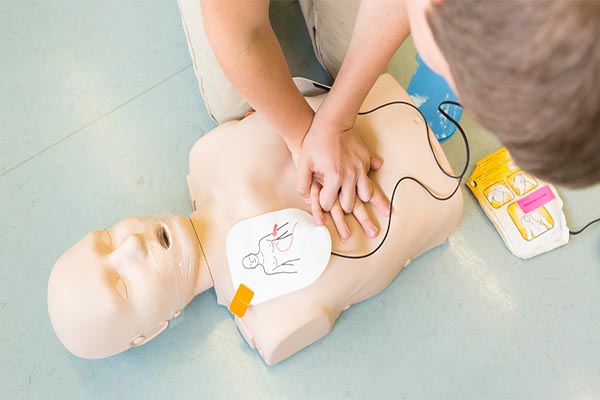
- Feel the physical resistance of a manikin’s chest, ensuring you learn the correct pressure needed.
- Practice the rhythm of compressions with real-time feedback from an instructor.
- Ask complex questions of a training expert who has real-world emergency experience.
- Demonstrate competency, which builds the genuine confidence required to act during a real crisis.
CPR Classes Near Me provides the necessary hands-on components that satisfy both national standards and local DC workplace regulations.
How Do You Choose the Best Class in Washington DC?
When searching for “CPR classes near me” in Washington DC, look for a provider that offers convenience, quality, and valid accreditation. DC is a city where time is limited. You need a location that is accessible and class schedules that fit around a busy professional or academic life.
Look for training providers that offer:
- Clear Certification Levels: They should distinguish clearly between standard CPR and professional BLS classes.
- Qualified Instruction: Ensuring that the teacher is certified and experienced in emergency response.
- Small Class Sizes: This ensures that every student gets individual attention and feedback during the skills practice.
- Current Materials: Ensure the course follows the latest emergency cardiovascular care (ECC) guidelines.
- Fast Certification Issuance: You should receive your digital certification card shortly after completing the requirements.
Is One Certification More Expensive Than the Other?
Generally, because BLS is more comprehensive and requires more training hours, the cost may be slightly higher than a standard CPR course. However, for those in the medical field, this is considered a necessary professional investment.
Standard CPR is the most cost-effective option for laypeople and is designed to get you trained and certified quickly without the clinical overhead required by BLS courses.
Summary of Main Differences
If you are still deciding, remember that the choice is primarily based on your role. Standard CPR focuses on the solo rescuer in public settings using basic equipment. BLS focuses on professional teams in clinical settings using advanced medical devices.
Standard CPR is ideal for the “everyday hero”—the person who wants to be ready if a colleague or stranger collapses. BLS is for the “duty-bound professional”—those whose job descriptions include the responsibility to provide medical care as part of a structured medical system.
Conclusion
The District of Columbia is a place where being prepared can make all the difference. Whether you are a resident looking to keep your family safe or a professional aiming to fulfill a mandatory workplace requirement, understanding the difference between CPR and BLS is the first step toward readiness.
Standard CPR is perfect for teachers, coaches, and parents, while BLS is the essential tool for those in healthcare and emergency response. Both represent a commitment to the community and the safety of those around you.
Don’t wait until an emergency happens to realize you need training. Take the initiative today to secure your future and protect the lives of your fellow Washingtonians.
Get Your CPR Certification with CPR Classes Near Me Washington DC. Whether you need a standard certification for your small business or a professional BLS card for your hospital rotation, we are here to help you get certified quickly and confidently.
FAQ Section
Q: Can I take a BLS class even if I’m not a healthcare professional?
A: Yes. Anyone is allowed to take a BLS class. If you prefer the most comprehensive training available and are comfortable with technical medical information, BLS is an excellent choice. However, remember that standard CPR is sufficient for most non-medical employers.
Q: Is BLS harder than CPR?
A: BLS is more comprehensive, meaning it covers more techniques and specialized equipment like bag-masks. While it is more intensive, the course is structured so that anyone can learn the skills if they focus and practice under instructor guidance.
Q: Do I need to be 18 to get certified in DC?
A: No. There is no official age limit for certification. The requirement is purely physical; if the student can physically compress the manikin’s chest to the required depth and pass the skills test, they are eligible to receive their card.
Q: How long does a typical class take?
A: A standard CPR/AED class usually takes about 2 to 3 hours. A professional BLS course for healthcare providers usually runs between 3.5 and 4.5 hours, depending on the number of students and their prior experience levels.
Q: Will my DC certification be valid if I move to another state?
A: Yes. Accredited CPR and BLS certifications are recognized across the country. If you move from DC to Maryland, Virginia, or any other state, your certification remains current until the printed expiration date.