Renew Your CPR in DC: A Simple Guide

CPR Archives

No Comments

Maintaining your CPR certification is more than just a requirement; it’s a commitment to being prepared to save a life. In the fast-paced environment of the District of Columbia, where professionals and everyday citizens alike are dedicated to their roles, keeping your skills current is essential. Whether you’re a healthcare professional whose job depends on a valid certification or a lay responder who wants to be ready for an emergency, knowing the recertification process is key.

The rules and requirements for CPR certification can seem complex, especially when you factor in local regulations and different certifying bodies. This guide is designed to cut through the confusion. We’ll walk you through the specifics of CPR recertification in DC, so you can confidently renew your skills and maintain your readiness. We’ll cover everything from what recertification entails to the different types of courses available and how to choose the right one for your needs.

What is the Difference Between an Initial CPR Certification and Recertification?

This is a common question, and understanding the distinction is crucial. An initial CPR certification course is for someone who has never been certified before. It’s a comprehensive training program that covers all the foundational knowledge and practical skills from the ground up. These courses are typically longer and more detailed, as they assume no prior knowledge. You will learn the “why” and the “how” of every step in the process, from recognizing an emergency to performing chest compressions and rescue breaths. The initial course sets the stage, providing you with the full set of skills and understanding required to respond effectively.

Recertification, on the other hand, is specifically for individuals who already hold a current or recently expired certification. The primary goal of a recertification course is to refresh your memory, update you on the latest guidelines, and re-evaluate your skills. These courses are generally shorter and more focused. They often move at a faster pace, assuming you already have a working knowledge of the core concepts. The emphasis is on practical skills review and a written exam to ensure your knowledge is current. Think of it as a tune-up for your life-saving skills.

  • Initial Certification: Comprehensive, longer, teaches fundamentals. For new learners.
  • Recertification: Refresher, shorter, focuses on updates and skills review. For previously certified individuals.

For many professionals in DC, keeping their certification current is a mandatory part of their job. The recertification process is a streamlined way to meet this requirement without starting from scratch.

Renew Your CPR in DC: A Simple Guide
How Often is CPR Recertification Required?

The standard for CPR certification renewal is every two years. This is a guideline set by major accrediting organizations like the American Heart Association (AHA) and the American Red Cross. The two-year period is not arbitrary; it’s based on research and the need to ensure that life-saving skills remain sharp and up-to-date. CPR and emergency cardiovascular care guidelines are periodically updated based on new scientific evidence.

After two years, it’s easy for skills to degrade. Without regular practice, even the most critical skills like chest compression depth and rate can become less effective. The recertification cycle helps prevent this skill decay and ensures that everyone with a certification is operating with the latest and most effective techniques. It’s a system designed to maintain a high standard of care and preparedness.

It’s important to note that some employers or organizations in the District of Columbia may have their own specific internal policies that require more frequent training. For example, a hospital might require its staff to complete annual skills checks in addition to the standard two-year recertification. Always check with your employer or licensing board to confirm their specific requirements. However, as a general rule, plan to recertify every 24 months.

What is the Difference Between BLS and Heartsaver Recertification?

In the District of Columbia, as elsewhere, the type of CPR certification you need depends on your professional role. The two most common types are Basic Life Support (BLS) and Heartsaver. The distinction between the two is vital for recertification.

Basic Life Support (BLS) for Healthcare Providers:

This is the gold standard for healthcare professionals. BLS recertification is designed for individuals who work in a medical setting, such as nurses, doctors, EMTs, dental hygienists, and other allied health professionals. The course is more advanced and includes:

  • Two-rescuer CPR scenarios.
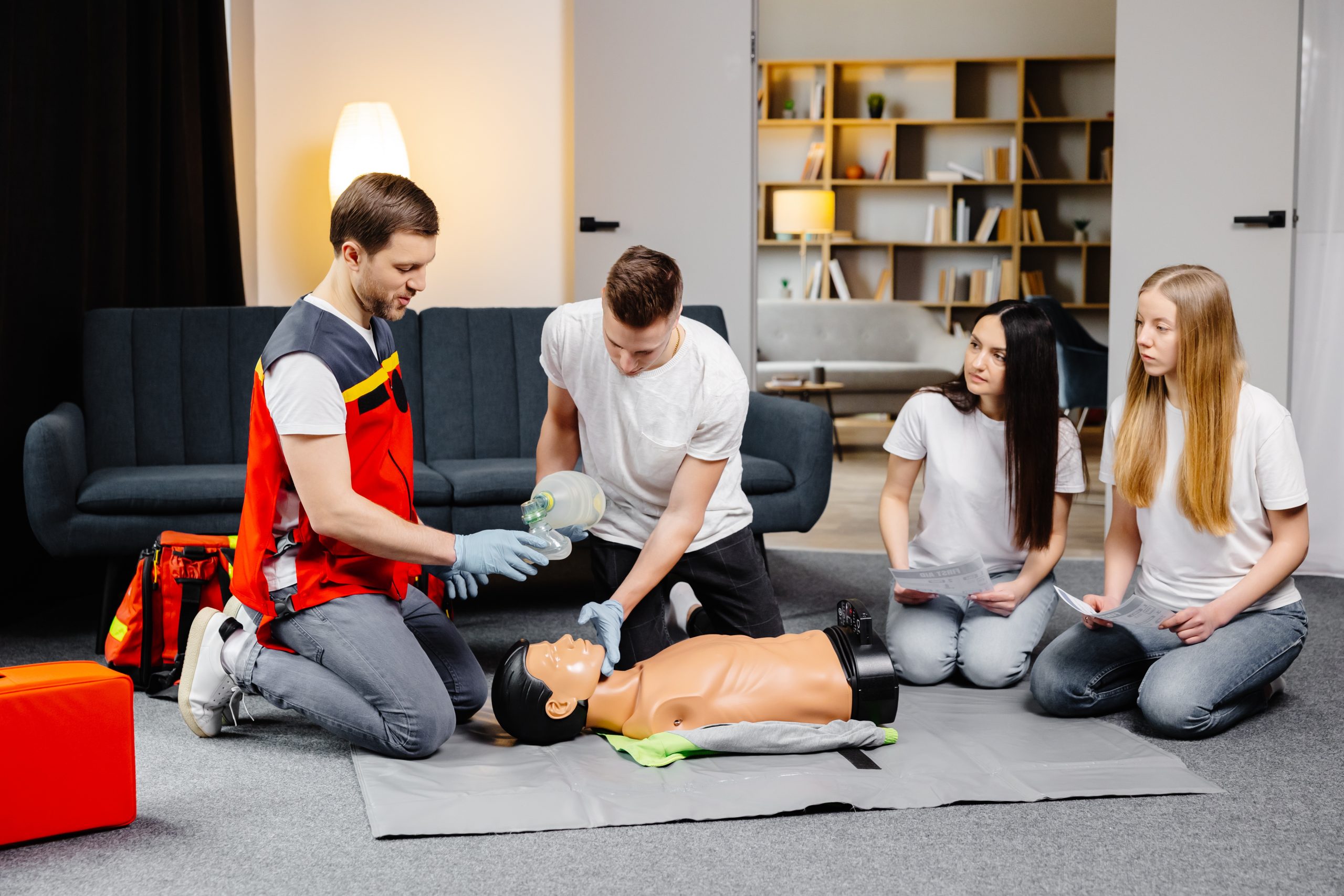
  • The use of a bag-mask device.
  • Specialized skills like managing an airway with an advanced adjunct.
  • Emphasis on team dynamics and communication in a resuscitation event.

The BLS recertification course is rigorous and ensures that healthcare providers can respond effectively to emergencies within a clinical or pre-hospital environment. It’s often a mandatory requirement for maintaining a professional license.

Heartsaver CPR AED:

This certification is designed for the general public, or “lay responders.” This includes teachers, coaches, fitness instructors, office workers, and anyone who wants to be prepared for an emergency outside of a medical setting. Heartsaver recertification focuses on:

  • Single-rescuer CPR.
  • How to use an automated external defibrillator (AED).
  • Choking relief for adults, children, and infants.
  • The course is less technical than BLS and is geared towards individuals who may be the first to arrive on the scene of an emergency.

When you go to recertify, you must choose the course that aligns with your original certification and your professional requirements. A healthcare provider cannot simply take a Heartsaver course and fulfill their recertification obligations.

Can You Take an Online-Only CPR Recertification Course?

The simple answer is no, you cannot obtain a fully online-only CPR recertification. This is a critical point to understand, especially in a city like DC, where official certifications are taken seriously. While online components are a key part of many modern training programs, a complete, valid certification requires a hands-on, in-person skills session.

Many providers, including the American Heart Association and the American Red Cross, offer a “blended learning” option. This is a very popular choice because it offers the best of both worlds: the flexibility of online learning with the essential hands-on component.

Here’s how blended learning works:

  1. Online Portion: You complete the cognitive part of the course online at your own pace. This includes watching videos, completing interactive modules, and taking a written exam. This part of the course covers all the latest guidelines and knowledge components.
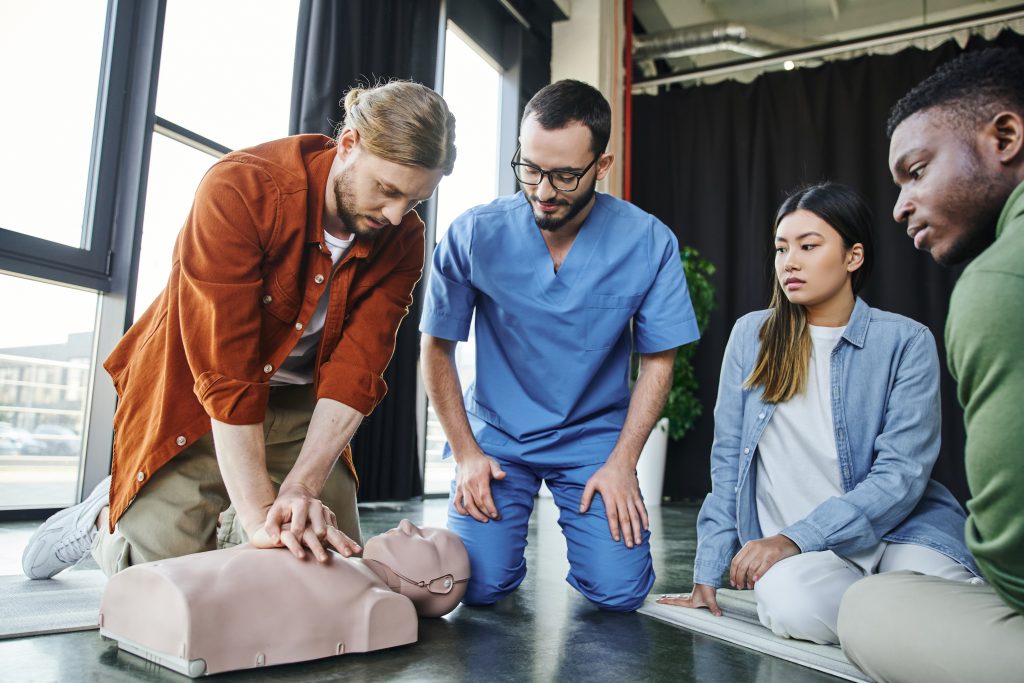
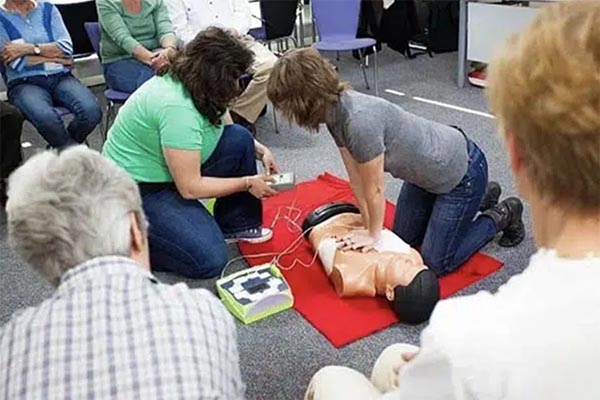
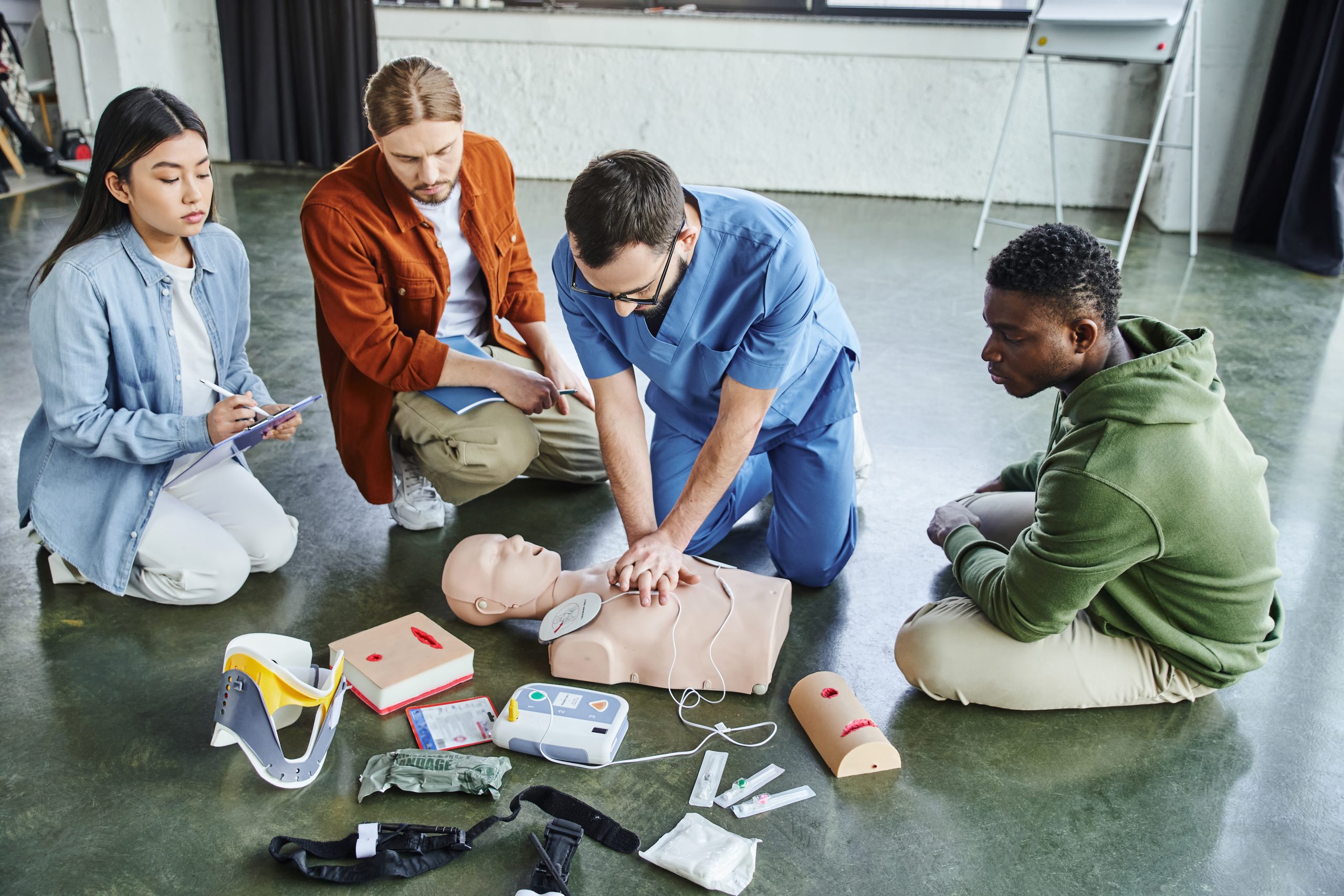
  2. In-Person Skills Session: After you complete the online portion, you schedule and attend a hands-on skills session with a certified instructor. During this session, you will physically practice and demonstrate your skills on mannequins. This includes performing chest compressions, rescue breaths, and using an AED. The instructor observes your technique and provides feedback, ensuring you are competent.

This blended approach is widely accepted in the District of Columbia and fulfills the requirements for a valid recertification. It saves time in the classroom and allows you to practice at your own pace. It is the most efficient way to recertify while still meeting all the necessary requirements. Be wary of any company that promises a 100% online certification, as it will likely not be recognized or accepted by employers or licensing boards.

What Should I Bring to My CPR Recertification Course?

Once you’ve registered for a CPR recertification course in DC, you’ll want to be prepared. Being prepared ensures a smooth and successful experience. Here is a list of what you should typically bring with you to the class:

  • Your Current or Recently Expired Certification Card: This is the most important item. The instructor will need to verify that you have a valid or recently expired certification to enroll you in a recertification course. Having this documentation ready saves time and prevents any issues.
  • Your Online Course Completion Certificate: If you chose a blended learning option, you must bring the certificate of completion from the online portion of the course. Without this, you will not be allowed to participate in the skills check.
  • A Photo ID: A valid government-issued photo ID is often required for identity verification.
  • Comfortable Clothing: You will be performing hands-on skills that involve kneeling and physical exertion, such as chest compressions on a mannequin. Dress in comfortable, loose-fitting clothing that allows for easy movement.
  • A Notebook and Pen: While much of the course is hands-on, you may want to take notes on any new information or tips provided by the instructor.

By having these items ready, you’ll be prepared for a successful and stress-free recertification experience.

What Should I Bring to My CPR Recertification Course?

Conclusion

Staying current with your CPR certification is a testament to your readiness and dedication to safety. In the District of Columbia, the recertification process is a straightforward path to renewing your life-saving skills. By understanding the distinction between initial certification and recertification, knowing the two-year renewal cycle, and choosing the right course for your needs (BLS vs. Heartsaver), you can ensure you remain certified and confident.

Remember, a valid certification from a reputable organization requires a hands-on skills session, so avoid online-only courses. Whether you’re a healthcare provider or a lay responder, staying certified means you’re always prepared to act in an emergency.

Ready to recertify? Don’t wait until your certification expires. Contact CPR Classes Near Me today to find a convenient and professional course in the District of Columbia. We offer the classes you need to stay current and confident.

FAQs about CPR Recertification in Washington D.C.

What is the expiration date on a CPR card?

Most CPR certification cards issued by major organizations like the American Heart Association (AHA) and the American Red Cross are valid for two years from the date of completion. The expiration date is printed on the card itself. It is highly recommended that you recertify before the expiration date to maintain continuous certification. If your card has expired, you may still be able to take a recertification course, but there may be a limited grace period. Check with your specific training provider for their policy on expired cards.

How long does a CPR recertification class take?

The duration of a CPR recertification class varies depending on the type of course and format. A traditional in-person recertification course is typically shorter than the initial course, often taking 2 to 4 hours to complete. If you choose the popular blended learning option, you will complete the online portion at your own pace, which can take a few hours. The in-person skills session for blended learning is usually a shorter, more focused session lasting around 1 to 2 hours. The total time for a blended course is often less than a traditional class because you complete the knowledge portion independently.

How do I find a CPR recertification course in the DC area?

Finding a CPR recertification course in the District of Columbia is easy. You should look for a certified training center that is affiliated with a recognized organization like the American Heart Association or the American Red Cross. You can use online search engines to find local providers. Make sure the provider offers the specific type of recertification you need, whether it’s BLS for healthcare providers or Heartsaver for the general public. Additionally, check their reviews and make sure they offer flexible scheduling options to fit your needs. Contact CPR Classes Near Me to find a course that works for you.

Do I need to be a healthcare professional to get CPR certified?

No, you do not need to be a healthcare professional to get CPR certified. CPR training is for everyone. While BLS certification is specifically for those in the medical field, a different type of certification, Heartsaver CPR AED, is designed for the general public, also known as “lay responders.” This course teaches the essential skills needed to respond to cardiac emergencies and is suitable for teachers, coaches, parents, and anyone who wants to be prepared to help in a life-threatening situation. Having CPR skills is a valuable asset for anyone, regardless of their profession.

Your Ultimate Guide to Choking First Aid

CPR Archives

No Comments

Imagine you’re at a restaurant, a family dinner, or simply sharing a meal with a friend, and suddenly, someone begins to struggle. They can’t speak, can’t breathe, and their face is turning red. This terrifying moment is a choking emergency, a silent and swift threat that can turn a normal day into a tragedy in mere seconds. The airway is a delicate pathway; when it’s blocked by food or another object, the brain is deprived of oxygen. Without immediate intervention, the consequences can be fatal.

The good news is that you don’t have to stand by helplessly. Knowing what to do can make all the difference. Simple, effective first aid techniques can dislodge the obstruction and restore breathing. This guide is designed to empower you with the knowledge to act quickly and confidently in a choking emergency. We’ll walk you through the critical steps for both adults and infants, ensuring you are prepared to be the hero when it matters most.

How Can You Tell Someone is Choking?

Recognizing the signs of a choking emergency is the crucial first step. While movies might show dramatic gasping, real-life choking can be surprisingly quiet. The person may be unable to make a sound because no air can pass through their vocal cords. It’s important to look for a combination of visual cues and physical responses.

The most universal sign is the “universal sign of choking”: hands clutched to the throat. However, not everyone will do this, so it’s essential to be aware of other indicators. A person may have difficulty breathing, or their breathing might be noisy, like a wheezing sound. They might be unable to cough, or their cough is weak and ineffective. Their skin may appear flushed or even turn blue (cyanosis) around the lips, a sign that they are not getting enough oxygen. Lastly, they might panic, looking scared and distressed, but be unable to speak or cry out for help. If you notice these signs, you need to act immediately.

Your Ultimate Guide to Choking First Aid
Screenshot

What Is the First Step When Responding to a Choking Emergency?

Your first step is to stay calm and assess the situation. Panicking will only hinder your ability to think and act effectively. Immediately ask the person, “Are you choking?” If they can speak, cough, or breathe, their airway is only partially blocked. In this case, encourage them to cough forcefully on their own. Do not perform any first aid techniques like the Heimlich maneuver yet, as their own coughing is the most effective way to clear the obstruction.

If they cannot speak, cough, or breathe, it means they have a severe, complete airway obstruction. This is a true emergency. At this point, you must immediately call for professional help. If you are alone, call 911 (or your local emergency number) on speakerphone as you begin to administer first aid. If someone else is with you, designate them to call for help while you focus on the victim. Time is of the essence, and getting emergency responders en route is critical, even if you are able to dislodge the object.

How Do You Perform the Heimlich Maneuver on an Adult?

The Heimlich maneuver, also known as abdominal thrusts, is a life-saving technique for a conscious adult who is choking. The goal is to create a sudden rush of air from the lungs, forcing the obstruction out of the airway. To perform the Heimlich maneuver:

  1. Stand behind the person: Wrap your arms around their waist.
  2. Make a fist with one hand: Place it just above their navel.
  3. Grasp your fist with your other hand: Make sure your thumb side is against their abdomen.
  4. Perform rapid upward thrusts: Press into their abdomen with a quick, upward motion, as if you are trying to lift them up.
  5. Continue thrusts: Repeat this motion 5 times. Check if the object has been dislodged after each set of 5 thrusts.
  6. Alternate with back blows: Some protocols recommend alternating 5 abdominal thrusts with 5 back blows (see the next section for how to perform back blows). Continue this cycle until the object is dislodged or the person becomes unconscious.

Remember, the goal is to apply pressure to the diaphragm, not the ribs. The force should be strong enough to create the necessary pressure without causing injury.

What Should You Do If You Are Choking and Alone?

Choking while you are by yourself is a terrifying scenario, but it is not a helpless one. You can still perform a version of the Heimlich maneuver on yourself. The principle remains the same: create pressure to force the object out. Here’s how you can save yourself:

  1. Make a fist: Place your thumb side against your abdomen, just above your navel.
  2. Grab your fist: With your other hand, grab your fist.
  3. Perform upward thrusts: Press your fist into your abdomen with a quick, upward motion.
  4. Use a firm object: Alternatively, you can lean forward over a firm object, such as the back of a chair, the edge of a counter, or a railing.
  5. Press your upper abdomen: Lean your abdomen onto the object and quickly and forcefully thrust yourself onto the object to create the necessary pressure.

Repeat these thrusts until the object is dislodged. The force from the thrusts should mimic the action of another person performing the Heimlich maneuver on you.

What Are the Key Differences When Responding to a Choking Child or Infant?

Responding to a choking child or infant requires different techniques to account for their smaller and more delicate bodies. You must never perform abdominal thrusts (the Heimlich maneuver) on an infant under one year of age, as it can cause serious internal injuries.

  • For a Child (1 to 8 years old): You can perform the Heimlich maneuver, but with less force. Kneel down to their level and use less powerful thrusts. You can also alternate between 5 back blows and 5 abdominal thrusts.
  • For an Infant (under 1 year old):
    1. Support their head and neck: Lay the infant face down on your forearm, supporting their head and neck with your hand. The infant’s head should be lower than their chest.
    2. Deliver back blows: Use the heel of your free hand to deliver 5 firm back blows between the infant’s shoulder blades.
    3. Turn the infant over: Flip the infant face up on your other forearm, still supporting their head.
    4. Perform chest thrusts: Using two fingers, deliver 5 quick chest thrusts to the center of their breastbone, just below the nipple line.
    5. Repeat: Continue alternating 5 back blows and 5 chest thrusts until the object is dislodged or the infant becomes unresponsive.

Always call 911 immediately for an infant choking emergency, even if they begin to breathe on their own. It’s crucial that they are medically evaluated.

Performing CPR in a Medical Emergency

What Happens If a Choking Victim Becomes Unconscious?

If, despite your best efforts, the choking victim becomes unresponsive and collapses, you must immediately transition to CPR. When a person becomes unconscious, their airway relaxes, and you may be able to see and remove the obstruction.

  1. Lower them to the ground: Carefully help the person to the ground, laying them flat on their back.
  2. Check for the object: Open their mouth and look for the object. If you can clearly see it and it is within reach, try to remove it with a finger sweep. Warning: Do not perform a blind finger sweep, as you might push the object further down. Only remove it if you can see it.
  3. Begin CPR: If you cannot see or remove the object, begin CPR. Start with chest compressions. The compressions can help dislodge the object. Give two rescue breaths after every 30 compressions.
  4. Continue CPR: Continue CPR until emergency medical services arrive and take over.

This is a critical transition that requires training. Knowing how to perform CPR is the next logical step after attempting to clear a choking obstruction.

Conclusion: Why Training is the Ultimate Preparedness

Choking emergencies are unpredictable and can happen anywhere, to anyone. While this guide provides essential information, the best way to prepare for these situations is through formal, hands-on training. A CPR certification course covers not only CPR but also detailed choking first aid for adults, children, and infants. These classes provide you with the practical skills and confidence to act decisively and correctly under pressure. You’ll learn the proper body mechanics, the correct force to apply, and how to adapt your response to different scenarios.

Don’t wait until an emergency strikes to wish you had the knowledge. Becoming certified is a simple, proactive step that can make you a true life-saver. Contact CPR Classes Near Me today to find a course and learn the skills that could one day save the life of a loved one, a friend, or even a stranger. Your preparedness is their best chance.

FAQs about Choking First Aid

Q: What is the main difference between a mild and severe choking emergency?

A: A mild choking emergency is when a person is able to cough forcefully, speak, or breathe. Their airway is only partially blocked. In this case, you should encourage them to keep coughing and watch them closely. A severe choking emergency is when the person is unable to speak, cough, or breathe, and their airway is completely blocked. This is when you must perform immediate first aid, such as the Heimlich maneuver, and call emergency services.

Q: Can I perform the Heimlich maneuver on a pregnant person or an obese person?

A: Yes, the technique is modified for these individuals. Instead of performing abdominal thrusts, you should perform chest thrusts. Stand behind the person and place your arms under their armpits. Make a fist and place it in the middle of their breastbone. Grasp your fist with your other hand and deliver quick chest thrusts. This is an effective and safer alternative.

Q: Is it safe to give an infant water to drink if they are choking?

A: No, you should never give a choking infant or child anything to drink or eat. This could worsen the situation by forcing the object further down their airway or introducing a new obstruction. The only appropriate response is to perform the correct first aid techniques to dislodge the object.

Q: When should I call 911 during a choking emergency?

A: You should call 911 immediately if the person is unable to speak, cough, or breathe. If you are alone, call on speakerphone as you begin to administer first aid. Even if you are able to dislodge the object, you should keep the line open, and the person should be medically evaluated to ensure there are no lasting injuries or complications.

Q: Will a CPR certification course teach me how to respond to a choking emergency?

A: Yes, absolutely. A comprehensive CPR certification course covers detailed instruction on responding to choking emergencies in adults, children, and infants, in addition to teaching you how to perform CPR. It is the best way to get the hands-on practice and confidence you need to act in a real-life situation.

DCPS Staff CPR Requirements Explained

CPR Archives

No Comments

In any educational environment, the safety and well-being of students are the highest priorities. This responsibility extends beyond academic instruction to include being prepared for unexpected emergencies. The D.C. Public Schools (DCPS) system understands this profoundly, and as a result, has implemented specific and crucial requirements for its staff regarding CPR certification. This policy isn’t just a bureaucratic formality; it’s a critical, life-saving measure designed to create a safer environment for every student.

Navigating these requirements can sometimes feel complex. Who exactly needs to be certified? How often do you need to renew your certification? What type of training is acceptable? This blog post will serve as your comprehensive guide to understanding the “why,” “who,” and “how” of DCPS CPR requirements for staff. By the end, you’ll have a clear roadmap for ensuring you are not only compliant with school policy but also fully prepared to act as a first responder in a medical emergency. Whether you are a teacher, administrator, coach, or support staff member, your role in student safety is paramount. Let’s dive into what you need to know to meet these vital standards.

Why Are CPR and AED Certifications Mandatory for DCPS Staff?

The mandate for CPR and AED certification among D.C. Public Schools staff is fundamentally about proactive risk management and creating a safety net for students. While we hope for a school year free of medical emergencies, the reality is that they can and do happen. Cardiac arrest, choking incidents, or other health crises can strike without warning. The time between a medical emergency occurring and the arrival of professional emergency medical services (EMS) is often the most critical window for intervention.

For every minute that passes without CPR, the chance of survival from cardiac arrest decreases significantly. This stark statistic highlights the immense value of having trained personnel on-site at all times. By requiring staff to be certified, DCPS ensures that there is always someone available who can provide immediate, life-sustaining care. This rapid response can literally be the difference between life and death. The policy isn’t just a recommendation; it’s a strategic investment in the well-being of the school community.

Furthermore, the requirement often includes training in the use of an Automated External Defibrillator (AED). These devices are becoming increasingly common in public spaces, including schools. An AED can deliver a life-saving electrical shock to a person in cardiac arrest. Knowing how to operate one correctly and in conjunction with CPR can dramatically improve a person’s chances of survival. A staff member with both CPR and AED skills is a powerful asset, capable of providing the highest level of non-professional care available until paramedics arrive. This comprehensive approach to safety prepares the school community for a wide range of potential emergencies.

The policy also fosters a culture of preparedness and shared responsibility. When multiple staff members are certified, it distributes the safety burden and ensures that no single individual is solely responsible in a crisis. It empowers every employee, from the classroom teacher to the janitorial staff, with the confidence and skills to act decisively and correctly when it matters most. This collective readiness not only protects students but also builds a more secure and resilient school environment for everyone.

DCPS Staff CPR Requirements Explained

Who Exactly Needs CPR Certification in D.C. Public Schools?

The D.C. Public Schools’ policy on CPR certification is broad and designed to cover a wide range of personnel who interact directly with students. It’s not just a requirement for health-related staff; it applies to anyone who might be in a position to respond to a medical emergency. The general principle is that if you are a DCPS employee and have direct supervision or interaction with students, you are likely required to be certified.

The most commonly affected groups include:

  • Teachers: All classroom teachers, regardless of grade level or subject, are typically required to have and maintain current certification. They are on the front lines, and often the first to notice a student in distress.
  • School Administrators: Principals, vice-principals, and other administrative staff must also be certified. Their role involves overseeing the entire school, including emergency protocols, and they need the skills to lead and respond effectively.
  • Coaches and Athletic Staff: This is a particularly critical group. Physical activities carry a higher risk of injury and medical events. Coaches and athletic trainers must be certified to respond to emergencies on the field, in the gym, or during practice.
  • School Nurses and Health Aides: While they have more extensive medical training, they are still required to hold current CPR certification, as it is a foundational skill for their role.
  • Support Staff: This can include a variety of roles such as school bus drivers, cafeteria workers, and paraprofessionals. Their duties often involve direct supervision or interaction with students, making their certification just as important.

It’s important to note that the specific list can vary slightly depending on the exact position and school policy updates. The best practice for any DCPS employee is to consult with their direct supervisor, the school’s human resources department, or the official DCPS policy handbook to confirm their individual requirements. This ensures that every staff member understands their specific obligations and can take the necessary steps to remain compliant. The goal is to have a comprehensive network of trained individuals throughout every school building, ensuring that a life-saving responder is never far away.

What Are the Specific CPR Certification Standards for DCPS Staff?

To meet the D.C. Public Schools’ requirements, a CPR certification must adhere to specific standards. It’s not enough to simply complete any online course or watch a few videos. The certification must come from a credible, nationally recognized organization and be a hands-on, skills-based program.

The two most widely accepted and reputable certifying bodies are:

  1. The American Heart Association (AHA): Their “Heartsaver” and “BLS” (Basic Life Support) courses are excellent options. Heartsaver courses are designed for the general public, while BLS is geared more towards healthcare providers, but both are often accepted. These courses include a combination of lectures, video instruction, and, critically, hands-on practice with manikins to ensure students can perform the skills correctly.
  2. The American Red Cross: Their “Adult and Pediatric First Aid/CPR/AED” course is another highly respected and widely accepted option. Similar to the AHA, the Red Cross emphasizes practical, hands-on training to build muscle memory and confidence in performing the skills.

Both organizations require a practical skills check, which must be completed in person. While some courses may have an online component for the lecture part, the hands-on portion is non-negotiable for DCPS compliance. This is because effective CPR is a physical skill that cannot be learned through a screen alone. Proper chest compression depth and rate, and correct hand placement, are all critical techniques that require in-person instruction and feedback.

The certification must be current. Most CPR certifications are valid for a period of two years. This means that DCPS staff must periodically renew their certification to ensure their skills are up-to-date and compliant with the latest guidelines. The two-year renewal cycle is standard across the industry and is based on a need to refresh memory and adapt to new best practices in resuscitation science. For DCPS employees, keeping track of this renewal date is a personal responsibility that is essential for maintaining their employment and, more importantly, for being ready to help in an emergency.

How Can DCPS Staff Get and Maintain Their CPR Certification?

Obtaining and keeping your CPR certification current as a DCPS employee is a straightforward process once you know the steps. The first step is to identify an authorized training provider. The organizations mentioned previously, such as the American Heart Association and the American Red Cross, have extensive networks of local training centers and instructors. A simple search for “CPR classes” will reveal many options.

Here’s a step-by-step guide:

  1. Find a Reputable Provider: Look for a training center that is officially sanctioned by the American Heart Association or the American Red Cross. This ensures that the curriculum and certification are up to the required standards. Many local community centers, fire departments, and private training companies offer these courses.
  2. Choose the Right Course: Make sure the course you enroll in includes both CPR and AED training. As mentioned, a blended learning approach with an online portion and a required in-person skills session is a very popular and convenient option. The in-person session is critical for meeting DCPS requirements.
  3. Complete the Training: The course will typically involve learning about the signs of a cardiac emergency, how to perform chest compressions, administer rescue breaths, and use an AED. You will practice these skills on a manikin under the supervision of a certified instructor.
  4. Receive Your Certification Card: After successfully completing both the cognitive and skills portions of the course, you will be issued a certification card. This can be a physical card or, more commonly now, an e-card that you can access and print online.
  5. Submit Proof to DCPS: Be sure to provide a copy of your new certification card to your school’s administrative office or human resources department. They will need this document for their records to confirm your compliance.

To maintain your certification, you must renew it before the expiration date. Most certifications are valid for two years. A reminder system, like a calendar alert or an email from your training provider, can be a great way to ensure you don’t miss the renewal window. Renewing your certification is not just a formality; it’s a chance to refresh your knowledge and skills, ensuring you are always ready to respond to a life-threatening situation. The investment of time and money in this training is a small price to pay for the peace of mind it provides and the potential to save a life.

How Can DCPS Staff Get and Maintain Their CPR Certification?
Screenshot

Conclusion

The D.C. Public Schools’ CPR requirements for staff are a testament to the school system’s commitment to student safety. By mandating that a wide range of employees be trained in cardiopulmonary resuscitation and the use of an AED, DCPS has created a powerful safety net that can mean the difference between life and death in a medical emergency. This policy is not about creating an extra burden; it is about empowering every single staff member with the skills and confidence to act decisively and correctly when a child’s life hangs in the balance.

Understanding these requirements is the first step toward compliance. Knowing who needs certification, what standards the training must meet, and how to get and maintain your certification is crucial for all DCPS employees. It’s a professional obligation that carries a profound personal reward: the ability to save a life. Taking action to get certified or to renew your existing certification is a step you can take today to ensure that your school community is as safe as it can possibly be.

If you are a DCPS staff member in need of CPR certification or renewal, don’t wait. Contact CPR Classes Near Me today to find a convenient, hands-on training course that meets all the requirements. We can help you gain the skills and confidence you need to make a difference.

FAQs about CPR Certifications for DCPS

Q1: What is the primary purpose of the CPR certification requirement for DCPS staff?

A1: The primary purpose is to ensure that trained personnel are always available to respond to medical emergencies involving students or other staff members. The requirement is a proactive measure to improve the chances of survival from cardiac arrest or other life-threatening events by providing immediate, life-sustaining care until professional emergency medical services (EMS) arrive. It’s a key part of creating a safe and secure environment for everyone in the school community.

Q2: Can I get my CPR certification for DCPS requirements entirely online?

A2: No, you cannot. While some courses offer a “blended learning” format where you can complete the instructional portion online, D.C. Public Schools, like most reputable organizations, requires a hands-on, in-person skills session. This practical component is critical because CPR is a physical skill that must be performed correctly. You need to demonstrate proper chest compression technique, hand placement, and AED use under the supervision of a certified instructor to receive a valid and compliant certification.

Q3: How long is the CPR certification valid for DCPS employees?

A3: The CPR certification for DCPS staff is typically valid for two years. This is the standard duration set by major certifying bodies like the American Heart Association and the American Red Cross. It is the responsibility of each staff member to keep track of their expiration date and renew their certification before it lapses. Renewing regularly ensures that your skills and knowledge are up-to-date with the latest emergency care guidelines.

Q4: Does the CPR certification need to include AED training?

A4: Yes, it is highly recommended and often a mandatory component of the certification required by DCPS. The use of an Automated External Defibrillator (AED) is a crucial part of the chain of survival for a person in cardiac arrest. Knowing how to use an AED correctly in conjunction with CPR can dramatically increase a person’s chances of survival. Most reputable CPR courses for lay rescuers and school staff include comprehensive AED training.

Q5: What should I do if my CPR certification is about to expire or has already expired?

A5: If your certification is about to expire, you should schedule a renewal course immediately. If it has already expired, you must take a new certification course, as expired certifications are not valid for employment compliance. You should inform your school’s administration or human resources department about the situation and provide proof of your new certification as soon as you receive it. Taking prompt action ensures you remain compliant with DCPS policy.