
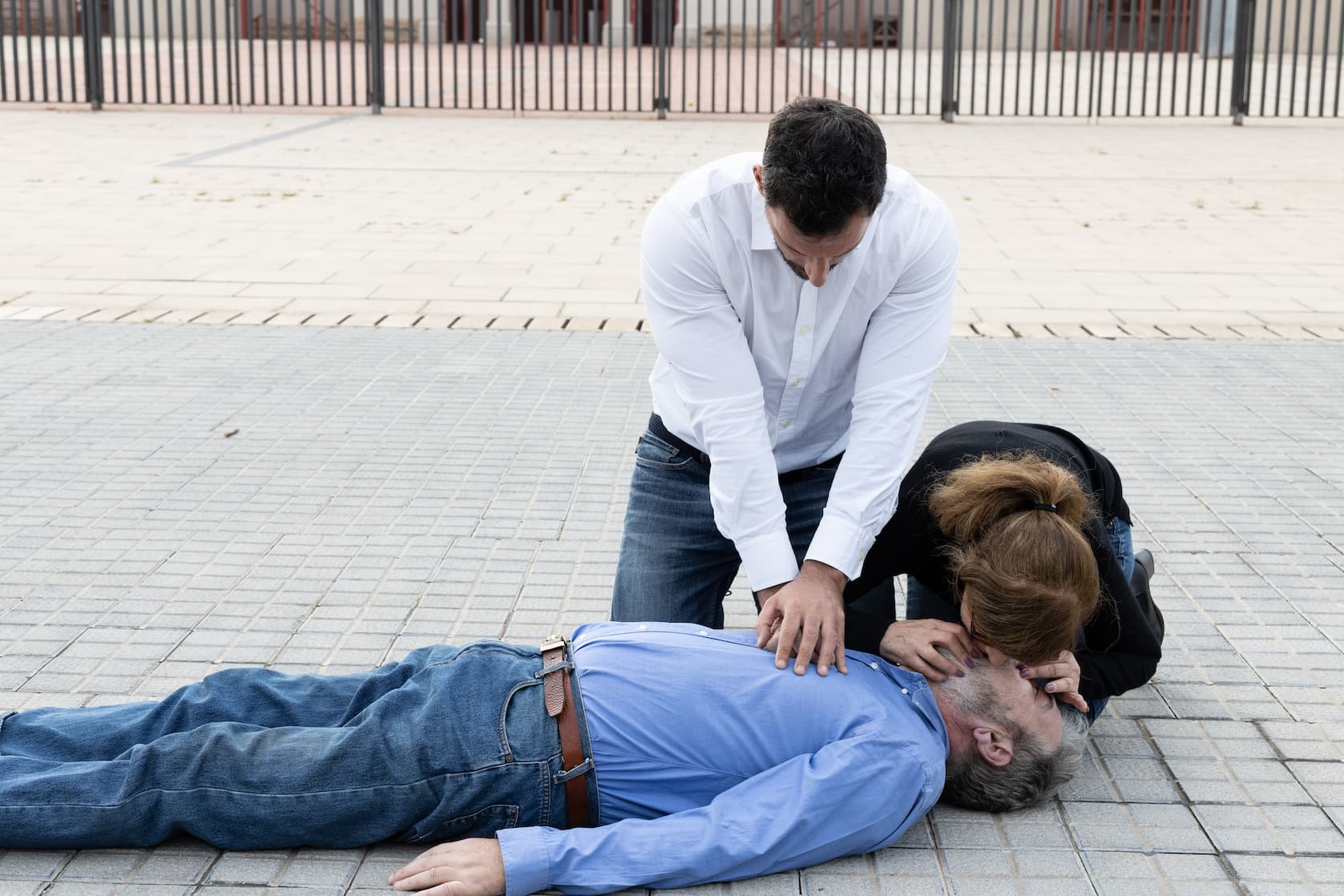
Imagine you are at a grocery store, a park, or even your own living room. Suddenly, someone collapses. They aren’t moving. They aren’t responding. In that split second, the world seems to stop. This is the reality of Sudden Cardiac Arrest (SCA), and it happens nearly 1,000 times every day in the United States alone.
The difference between a tragedy and a survival story often comes down to one person: a bystander who decides to act.
Reading about Cardiopulmonary Resuscitation (CPR) in a textbook is one thing, but applying it in a real-life scenario requires confidence and clear knowledge. When adrenaline is high, you need a simple, actionable plan. This guide breaks down the process of administering CPR into manageable steps, focusing on what it actually feels like and what you need to prioritize to save a life.
Why is immediate action so critical?
Time is the enemy of cardiac arrest. When the heart stops pumping, blood flow to the brain ceases immediately. Brain cells begin to die within minutes.
- 0–4 Minutes: Brain damage is unlikely.
- 4–6 Minutes: Brain damage is possible.
- 6–10 Minutes: Brain damage is probable.
- Over 10 Minutes: Survival is rare.
The average ambulance response time can range from 7 to 14 minutes depending on your location. If you wait for professionals to arrive without acting, the window for survival may close. By administering CPR, you are essentially acting as the victim’s heart, manually pumping oxygenated blood to the brain and organs until advanced help arrives.
How do I assess the scene and the victim?
Before you rush in, you must ensure you don’t become a second victim. Real-life emergencies are chaotic. There could be traffic, electrical wires, or broken glass.
1. Check the Scene:
Is it safe? If the environment is dangerous (e.g., a fire or a busy highway), stay back and call 911. If it is safe, approach the victim.
2. Check for Responsiveness:
Tap the victim on the shoulder firmly and shout, “Are you okay?” Do this loudly. You are looking for any movement, groaning, or eye-opening.
3. Check for Breathing:
Scan the chest for rise and fall. This should take no longer than 10 seconds.
- Note: In the first few minutes of cardiac arrest, a victim may exhibit “agonal gasps.” This looks like snoring, gurgling, or gasping for air. This is not normal breathing. If the person is gasping or not breathing at all, you must begin CPR.
Who do I call first?
If you determine the person is unresponsive and not breathing normally, you must activate the Emergency Response System immediately.
- If you are alone: Call 911 immediately. Put your phone on speaker mode and lay it on the ground next to the victim’s head. The dispatcher can guide you.
- If others are around: Point specifically to one person (make eye contact) and say, “You! Call 911 and get an AED!” Being specific breaks the “bystander effect” where everyone assumes someone else is calling.
How do I perform high-quality chest compressions?
This is the core of CPR. In real life, compressions are physically demanding. You may feel ribs crack or pop; this is normal and implies you are pushing hard enough. Do not stop.
Step 1: Positioning
Place the victim on their back on a firm, flat surface. A bed or sofa is too soft and will absorb the force of your compressions. Kneel beside the victim’s chest.
Step 2: Hand Placement
- Place the heel of one hand in the center of the victim’s chest (on the lower half of the breastbone).
- Place the heel of your other hand directly on top of the first.
- Interlock your fingers.
Step 3: Body Mechanics
- Straighten your arms and lock your elbows.
- Position your shoulders directly over your hands.
- Use your upper body weight to push, not just your arm muscles.
Step 4: Push Hard and Fast
- Depth: Push down at least 2 inches (5 cm).
- Rate: Push at a rate of 100 to 120 compressions per minute.
- Recoil: Allow the chest to return to its normal position after each push. This “recoil” pulls blood back into the heart so you can pump it out again.
Pro Tip: To keep the rhythm, push to the beat of “Stayin’ Alive” by the Bee Gees, “Baby Shark,” or “Imperial March” from Star Wars.
What about rescue breaths?
For decades, CPR training emphasized “A-B-C” (Airway, Breathing, Compressions). However, guidelines have shifted.
Hands-Only CPR (Untrained Rescuers)
If you are untrained or uncomfortable giving mouth-to-mouth breaths, perform Hands-Only CPR. This involves continuous chest compressions without stopping for breaths. The victim has enough oxygen in their blood to last several minutes, provided you keep it circulating.
Conventional CPR (Trained Rescuers)
If you are trained and have a barrier device (like a pocket mask), follow the 30:2 ratio:
- Perform 30 chest compressions.
- Open the airway (Head-Tilt, Chin-Lift maneuver).
- Give 2 rescue breaths (each lasting 1 second).
- Watch for chest rise.
- Resume compressions immediately.
How do I use an AED?
An Automated External Defibrillator (AED) is the only thing that can restart a stopped heart. You will find them in airports, malls, gyms, and offices. They are designed to be used by anyone, even children.
1. Turn it On:
Open the lid or press the “Power” button. Once on, the machine will talk to you.
2. Follow Voice Prompts:
The AED will tell you exactly what to do. It will usually say, “Remove clothing from patient’s chest.” You may need to cut the shirt open (scissors are usually included in the kit).
3. Apply Pads:
Peel the backing off the sticky pads. Place them exactly as shown in the pictures on the pads:
- Pad 1: Upper right chest (below the collarbone).
- Pad 2: Lower left chest (below the armpit).
4. Clear the Victim:
The AED will say, “Analyzing heart rhythm. Do not touch the patient.” Stop CPR and step back.
5. Deliver Shock (If Advised):
If the AED detects a shockable rhythm, it will say, “Shock advised. Charging… Push the flashing button.” Ensure no one is touching the victim and press the button.
6. Resume CPR:
Immediately after the shock, or if no shock is advised, the AED will tell you to resume compressions. Do not remove the pads.
When do I stop CPR?
Once you start, do not stop unless one of the following occurs:
- EMS Arrives: The paramedics physically take over.
- Signs of Life: The victim begins to wake up, move, or breathe normally.
- AED Analysis: The machine tells you to pause for analysis.
- Exhaustion: You are too physically exhausted to continue (if possible, switch with another bystander every 2 minutes to maintain compression quality).
- Scene Danger: The environment becomes unsafe.
What are the psychological hurdles of Real-Life CPR?
Administering CPR in real life is vastly different from a classroom with a mannequin. It is messy, noisy, and frightening.
- Fear of Harming the Victim: Many people hesitate because they don’t want to hurt the person. Remember: The victim is already dead. You cannot make their condition worse. A broken rib heals; death does not.
- The “Gasp”: As mentioned, agonal breathing can be confusing. If you are unsure if they are breathing, assume they are not and start compressions.
- Physical Exhaustion: Two minutes of CPR feels like an hour. Adrenaline will help, but fatigue sets in fast. This is why involving other bystanders to switch out is helpful.
Why certification matters
While reading this guide provides a mental framework, nothing replaces the muscle memory gained in a hands-on class. In a certification course, you practice the depth of compressions, the timing of breaths, and the operation of an AED simulator.
Being certified gives you the confidence to command a scene. Instead of panicking, you fall back on your training. You become the person who knows what to do when everyone else is frozen.
Conclusion
Sudden Cardiac Arrest can happen to anyone—a parent, a spouse, a coworker, or a child. By learning the steps of assessing the scene, calling 911, and performing high-quality chest compressions, you become a lifeline.
Real-life CPR is intense, but the steps are simple: Call. Push. Shock.
Don’t wait for an emergency to wish you were prepared. Gain the confidence and skills to save a life today.Contact CPR Classes Near Me today and find a course that fits your schedule.
Leave a Reply