
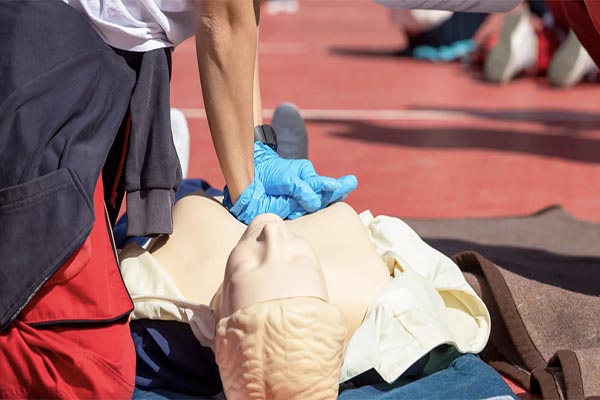
When a patient sits in a dental chair, they aren’t just trusting you with their smile—they are trusting you with their life. While dental procedures are generally safe, the combination of patient anxiety, local anesthesia, and underlying health conditions creates a unique environment where medical emergencies can happen.
For dental assistants and office staff, being prepared isn’t just a “good idea”; it is a professional and legal necessity. In this comprehensive guide, we will explore everything you need to know about CPR and BLS certification specifically tailored for the dental industry.
Why is CPR certification required for dental assistants?
Dental assistants are the backbone of the clinical team. Because they are often the ones closest to the patient during a procedure, they are frequently the first to notice the subtle signs of distress, such as labored breathing or a loss of consciousness.
- Licensing and Compliance: Most state dental boards require dental assistants—especially those seeking “Registered” or “Certified” status—to maintain current Basic Life Support (BLS) certification.
- Safety During Sedation: If your office provides any level of sedation, from nitrous oxide to IV sedation, the risk of respiratory or cardiac depression increases. Assistants must be trained to intervene immediately.
- Professional Liability: Operating without a current certification can lead to heavy fines, license suspension for the dentist, and increased liability in the event of a malpractice suit.
Is there a difference between CPR and BLS for dental professionals?
This is one of the most common questions we hear. While people often use the terms interchangeably, there is a significant difference in the level of training provided.
- Heartsaver CPR: This is generally designed for the “layperson” (teachers, coaches, or parents). It focuses on high-quality chest compressions and basic AED use.
- Basic Life Support (BLS): This is the “Healthcare Provider” level of CPR. It is the gold standard for dental offices. BLS covers everything in a standard CPR class but adds:
- Two-Rescuer Teams: Learning how to coordinate with the dentist or hygienist.
- Bag-Mask Ventilation: Using professional equipment to provide breaths.
- Advanced Airway Management: Critical for patients in a dental chair.
- Pulse Checks: Accurately identifying a cardiac event in a clinical setting.
For dental assistants, BLS is almost always the required certification level.
What are the specific requirements for dental offices?
A dental office is more than just a place for cleanings; it is a mini-surgical suite. Because of this, regulatory bodies like the American Dental Association (ADA) and state boards have specific expectations for the facility:
- Staff-Wide Training: It is highly recommended (and in many states, required) that every person in the building—including the front desk staff—is trained in at least basic CPR.
- The AED Requirement: Many states now mandate that any dental office administering sedation must have an Automated External Defibrillator (AED) on-site. Even if not mandated, it is the standard of care.
- Emergency Action Plans (EAP): Offices should have a written plan detailing who calls 911, who grabs the emergency kit, and who starts compressions.
- Mock Drills: To remain “rescue ready,” the ADA suggests conducting mock emergency drills at least once a year.
What skills are covered in a dental-focused BLS class?
When you take a BLS class through a provider like CPR Classes Near Me, the curriculum is designed to meet the rigorous standards of the American Heart Association (AHA) or Red Cross. You will learn:
- Adult, Child, and Infant CPR: Techniques vary significantly based on the age of the patient.
- AED Operation: How to use a defibrillator safely, even in a cramped dental operatory.
- Choking Relief: Handling airway obstructions for conscious and unconscious victims.
- Rescue Breathing: Using a pocket mask or bag-valve mask (BVM).
- Team Dynamics: How to communicate effectively during a high-stress “Code Blue” situation.
How often do dental assistants need to recertify?
Consistency is key to life-saving skills. Most BLS and CPR certifications are valid for two years.
However, many dental professionals find that their skills start to “fade” after about six months. It is important to keep your expiration date on your calendar. If your certification lapses, you are technically out of compliance with your state board, which can jeopardize your ability to work.
Can you get CPR certified online for a dental license?
This is a tricky area. Many “100% online” courses exist, but most State Dental Boards do not accept them.
The reason is simple: You cannot learn how to properly compress a chest or use a BVM by clicking a mouse. Most boards require a hands-on skills assessment.
The Blended Learning Option:
Many dental assistants prefer “Blended Learning.” This allows you to:
- Complete the cognitive/lecture portion online at your own pace.
- Schedule a brief, in-person skills check to demonstrate your technique on a manikin.
- This “Blended” approach is widely accepted by dental boards and the AHA.
What are the benefits of group training for dental offices?
Rather than sending assistants to separate classes, many offices choose to host a group training session.
- Cohesion: Your team learns to work together in the actual environment where an emergency would occur.
- Efficiency: You can get the entire staff certified in a single morning or afternoon.
- Customization: The instructor can help you look at your specific office layout and identify where the AED and emergency kits should be stored.
What should be in a dental office emergency kit?
While CPR is the primary focus, a complete emergency response includes having the right tools. Your office should regularly audit its kit for:
- Epinephrine: For anaphylactic reactions.
- Nitroglycerin: For chest pain/angina.
- Glucose/Sugar: For diabetic emergencies (hypoglycemia).
- Albuterol: For asthma attacks.
- Aspirin: For suspected heart attacks.
- Pocket Masks/BVMs: For safe rescue breathing.
Conclusion
CPR and BLS certification for dental assistants are about more than just checking a box for a license renewal. It is about creating a culture of safety that reassures your patients and empowers your team. By staying current with your training, you ensure that if the unthinkable happens in your chair, you have the skills, the confidence, and the coordination to save a life.
Don’t wait until your certification expires or an emergency occurs. Contact CPR Classes Near Me today to schedule your BLS certification or to set up a group training session for your entire dental office!
Frequently Asked Questions (FAQ)
1. Does a dental assistant need BLS or just CPR?
In almost all cases, dental assistants need BLS (Basic Life Support) for Healthcare Providers. Standard CPR classes are usually intended for the general public and do not cover the team-based rescue techniques or medical equipment (like bag-valve masks) required in a clinical dental setting.
2. How many CE credits do I get for a CPR class?
This varies by state. However, many dental boards grant between 2 to 4 Continuing Education (CE) credits for a completed BLS/CPR course. Always check with your specific state board to see if the provider is “Board Approved.”
3. Is an AED mandatory in a dental office?
While requirements vary by state, an AED is increasingly becoming a legal requirement for any office that performs sedation or general anesthesia. Even in offices that only use local anesthesia, having an AED is considered the standard of care and is highly recommended by the ADA.
4. What happens if my CPR card expires?
If your certification expires, you are no longer in compliance with most state dental board regulations. This means you may not be legally allowed to assist in clinical procedures until you recertify. It can also lead to issues with your office’s malpractice insurance.
5. Do front office staff need to be certified?
While not always legally required for non-clinical staff, it is a best practice. Emergencies can happen in the waiting room just as easily as in the operatory. Having a front-office team that knows how to call 911 and begin basic CPR can be life-saving.
Leave a Reply