
Someone is unresponsive, but they’re breathing normally. Now what? You don’t need CPR. You need to protect their airway until help arrives. That’s what the recovery position is for.
Here’s when to use it, how to do it, and when it’s the wrong move.
What is the recovery position?
The recovery position is a way of laying an unresponsive person on their side. It keeps their airway open and lets vomit or fluid drain out of the mouth instead of blocking the throat. It also keeps them stable so they don’t roll onto their back or face.
When to use the recovery position
Use it when a person:
- Doesn’t respond to your voice or touch
- Is breathing normally
- Doesn’t have an injury that makes moving them unsafe
Common examples include someone who fainted and hasn’t woken up yet, someone who is very drunk or drowsy, or someone after a seizure has stopped. Call 911 before you do anything else.
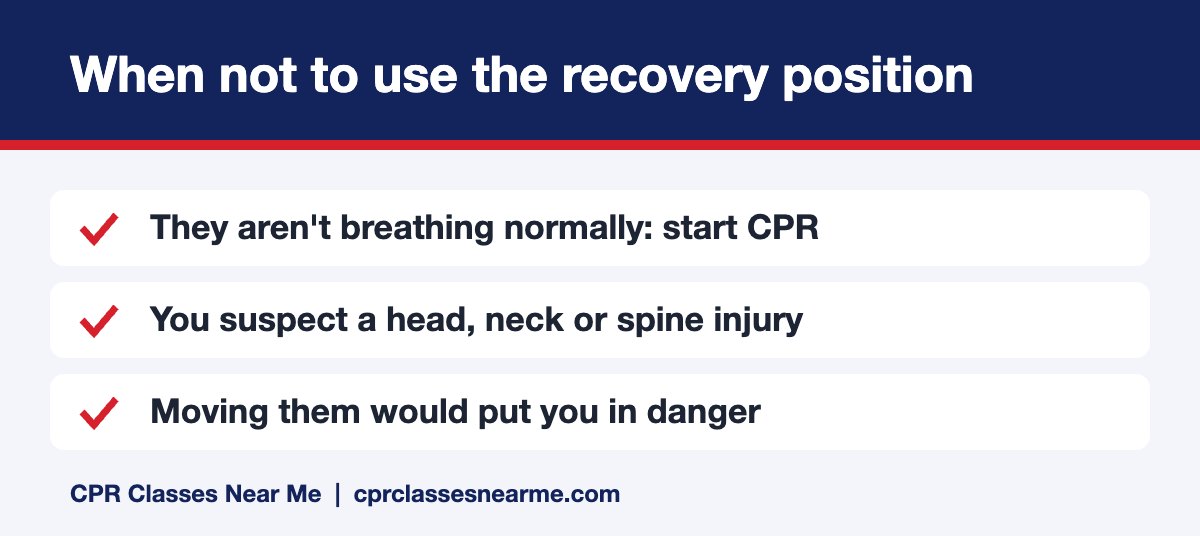
When not to use the recovery position
- They aren’t breathing normally. If the person is not breathing or is only gasping, they need CPR, not the recovery position. Call 911 and start chest compressions. Gasping can fool people, so learn the signs in Agonal Breathing: What It Looks Like, Sounds Like, and Why You Should Start CPR Right Away.
- You suspect a head, neck or spine injury. After a fall, a car crash or a dive into shallow water, keep the person still unless you need to move them to keep the airway open or to get them away from danger. Let the 911 dispatcher guide you.
- Moving them would put you in danger. Check the scene first. Traffic, fire, water and electricity come before anything else.
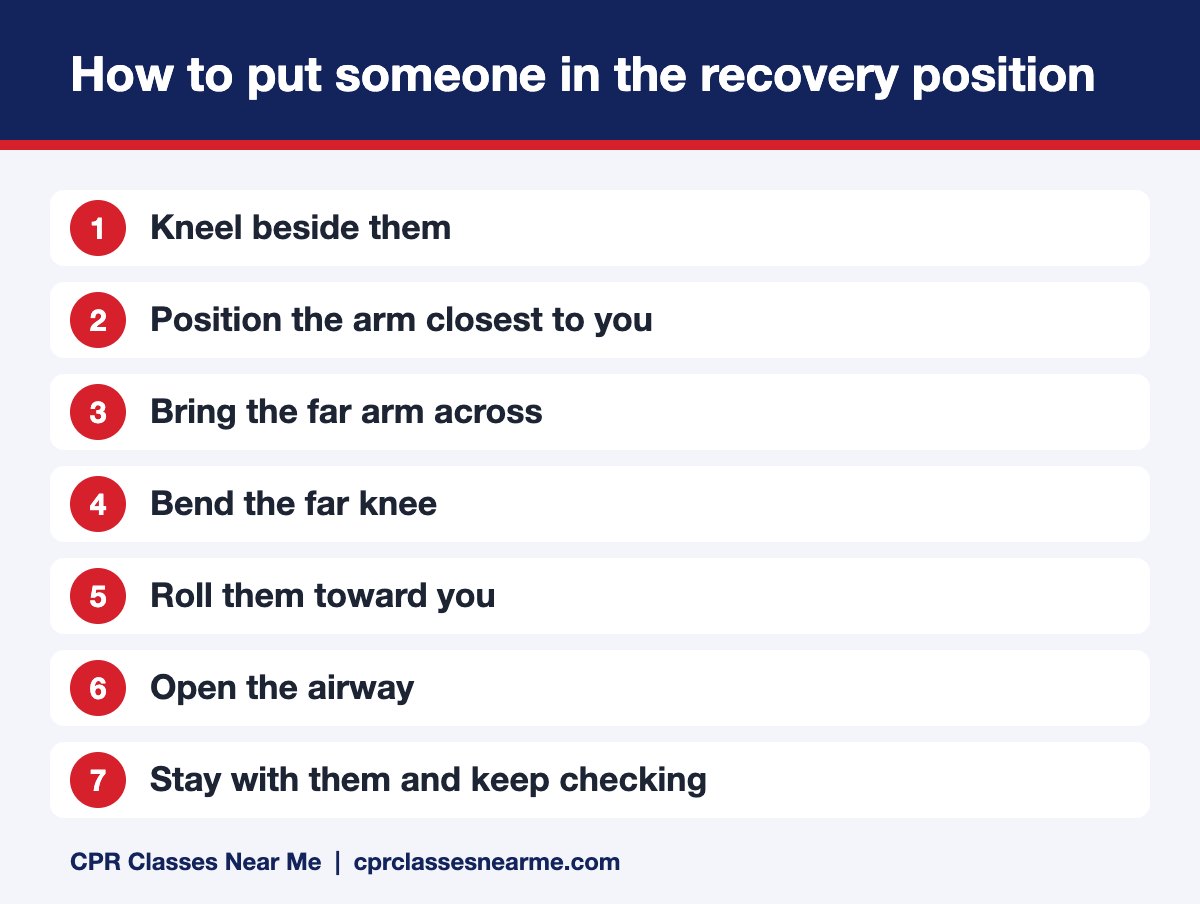
How to put someone in the recovery position, step by step
These steps are for an adult or older child lying on their back. Call 911 first, or have someone else call.
1. Kneel beside them
Get down next to the person’s chest. Remove their glasses and anything bulky from their pockets.
2. Position the arm closest to you
Place the arm nearest you out at a right angle to their body, with the elbow bent and the palm facing up.
3. Bring the far arm across
Take the arm farthest from you and bring it across their chest. Hold the back of that hand against the cheek nearest you.
4. Bend the far knee
With your other hand, lift the far knee so the leg is bent and the foot is flat on the ground.
5. Roll them toward you
Keep their hand pressed against their cheek. Pull on the bent knee to roll the person onto their side, facing you.
6. Open the airway
Adjust the top leg so the hip and knee are bent at right angles. This stops them from rolling forward. Tilt the head back gently and lift the chin so the airway stays open. Make sure the mouth points slightly down so fluid can drain.
7. Stay with them and keep checking
Watch their breathing until EMS arrives. If they stop breathing normally, roll them onto their back, call out for an AED and start CPR right away.
Recovery position for babies
For an infant who is unresponsive but breathing normally, cradle the baby in your arms with their head tilted slightly downward, so they won’t choke on fluid or vomit. Call 911 and keep watching their breathing until help arrives.
What to tell the 911 dispatcher
- Your location
- That the person is unresponsive but breathing
- What happened, if you know
- Any changes, like breathing that slows, becomes noisy or stops
Keep your phone on speaker so you can listen while you help.
Common mistakes to avoid
- Using the recovery position instead of CPR. If breathing isn’t normal, start CPR.
- Walking away. Breathing can change. Stay close and keep checking.
- Giving food or drink. Don’t put anything in the mouth of someone who isn’t fully awake.
- Twisting the neck. Roll the head, shoulders and hips together as one unit.
Practice it before you need it
Reading the steps helps. Practicing them with an instructor is what makes them stick. You can read about other core first aid skills in The Importance Of Learning Basic First Aid Skills.
Want to be ready for unresponsive people who aren’t breathing, too? Take an in-person BLS CPR & AED class, or choose the First Aid + AHA BLS CPR & AED class to add skills like bleeding control and burn care. See CPR & First Aid Classes, then find a location near you.
This article is general information. It is not a substitute for hands-on training or medical advice. In an emergency, call 911.