
Imagine someone collapses in front of you. You rush over. They’re making strange gasping sounds, struggling to breathe. You think they’re still breathing, so you wait for help to arrive. Those gasps aren’t normal breathing. They’re called agonal breathing, and they mean the person is in cardiac arrest. Every second you wait, their chance of survival drops.
Agonal breathing often confuses bystanders. It looks like the person is trying to breathe, so people hesitate to start CPR. That hesitation costs lives. This guide will show you exactly what agonal breathing looks and sounds like, why it’s not real breathing, and why you need to call 911 and start CPR immediately when you see it.
What is agonal breathing?
Agonal breathing is a gasping reflex that happens during cardiac arrest. It’s not real breathing. It’s a brainstem response triggered when the heart stops and oxygen stops reaching the brain. The person isn’t getting air into their lungs. They’re not conscious. Their brain is shutting down, and these gasps are the body’s last attempt to survive.
Agonal breathing can show up early in cardiac arrest. It can appear, stop, and start again. But no matter how it looks, agonal breathing always means one thing: the person is in cardiac arrest and needs CPR right away.
What agonal breathing looks like
Agonal breathing doesn’t look like normal breathing. Here’s what you’ll see:
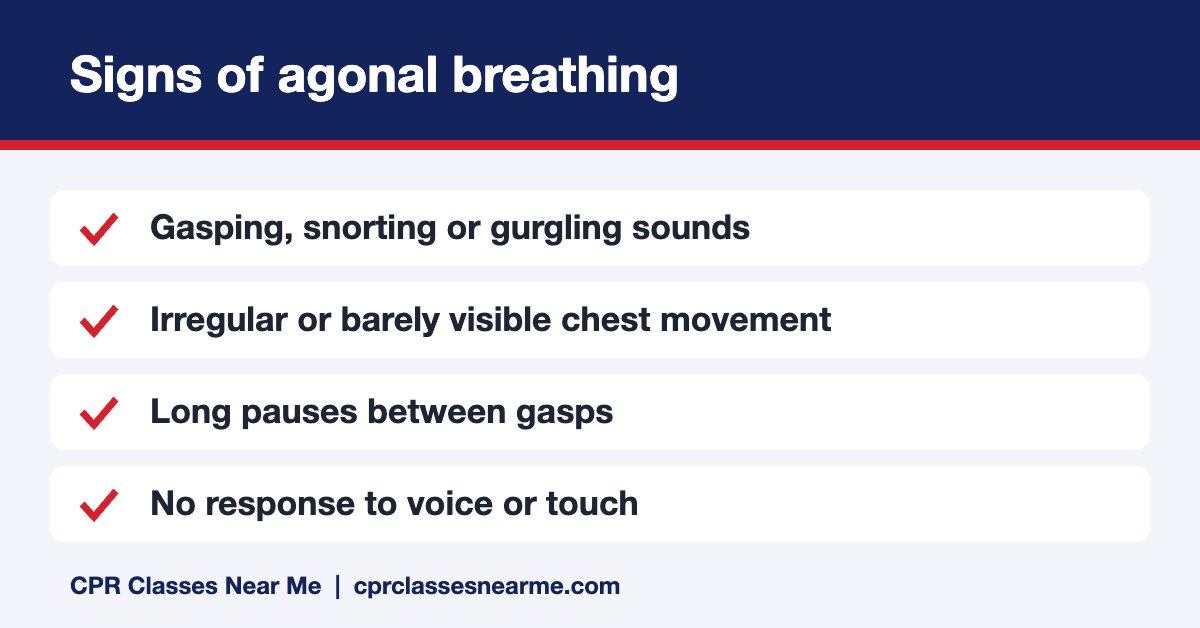
- Gasping movements. The person’s mouth opens wide, like they’re trying to gulp air. The chest may rise slightly, but not in a steady rhythm.
- Irregular or absent chest movement. Normal breathing has a consistent rise and fall. Agonal breathing is erratic, slow, or barely visible.
- Head or jaw movement. You might see the person’s head tilt back or their jaw drop as they gasp.
- No response. The person won’t respond to your voice or touch. They’re unconscious.
- Pauses between gasps. Gasps can be seconds apart, giving the false impression that the person is “trying” to breathe on their own.
Normal breathing is steady, quiet, and automatic. Agonal breathing is none of those things. If you see someone gasping, struggling, or making irregular breathing movements while unresponsive, assume they’re in cardiac arrest.
What agonal breathing sounds like
Agonal breathing sounds are distinct and unsettling. Here’s what you might hear:
- Gasping or snorting sounds. Sharp, raspy, or choking noises as air moves in and out irregularly.
- Gurgling. Fluid in the airway can create a gurgling sound.
- Wheezing or labored breathing sounds. Strained, noisy attempts to breathe.
- Long pauses of silence. The person may gasp once, then stop for several seconds before gasping again.
These sounds don’t mean the person is breathing effectively. They mean the brain is firing off desperate reflexes in the absence of oxygen. If you hear these sounds and the person is unresponsive, they need CPR.
Why agonal breathing is not normal breathing
Agonal breathing isn’t breathing. Real breathing supplies oxygen to the lungs, which the blood carries to the brain and organs. Agonal breathing does none of that. Here’s why:
- No oxygen exchange. The gasps are too shallow and irregular to pull enough air into the lungs. Even if the chest moves slightly, oxygen isn’t reaching the bloodstream.
- The heart has stopped. Without a heartbeat, blood isn’t circulating. Even if air entered the lungs, it wouldn’t go anywhere.
- The brain is short on oxygen. Agonal breathing is a reflex from the brainstem, not a sign of consciousness or recovery. It means the brain is starved of oxygen and shutting down.
Waiting for agonal breathing to “improve” or assuming the person will recover on their own is a dangerous mistake. Agonal breathing is a sign that the person needs CPR and an AED now.
How to tell agonal breathing apart from normal breathing
When you check on an unresponsive person, you need to decide fast: are they breathing normally, or do they need CPR? Here’s how to tell the difference quickly:
Normal breathing
- Chest rises and falls steadily.
- Breathing is regular, quiet, and effortless.
- The person may respond to your voice or touch.
- No gasping, choking, or long pauses.
Agonal breathing
- Gasping, irregular, or barely visible chest movement.
- Sounds strained, raspy, or gurgling.
- Long pauses between breaths.
- The person doesn’t respond to anything.
If you see anything that looks like gasping, struggling, or irregular breathing in an unresponsive person, treat it as agonal breathing. Don’t wait. Call 911 and start CPR.
Why agonal breathing means you should start CPR immediately
Agonal breathing is a sign of cardiac arrest. When the heart stops, the brain quickly runs short of oxygen. Agonal breathing doesn’t buy you extra time. It’s a countdown.
Here’s what happens when you start CPR:
- Chest compressions keep blood moving. Compressions physically pump blood from the heart to the brain, keeping oxygen moving even though the heart isn’t beating.
- You keep the brain alive. CPR buys time until advanced help arrives with a defibrillator or other life-saving equipment.
- You give the person a chance. Starting CPR right away, and using an AED as soon as one arrives, gives the person the best chance until EMS takes over.
Bystanders who hesitate because they see agonal breathing lose precious seconds. The brain can’t wait. Call 911 first, then start compressions. If you’re trained in Hands-Only CPR, push hard and fast in the center of the chest. If you’re not sure what to do, the 911 dispatcher will guide you.
What to do when you see agonal breathing
Follow these steps the moment you recognize agonal breathing:
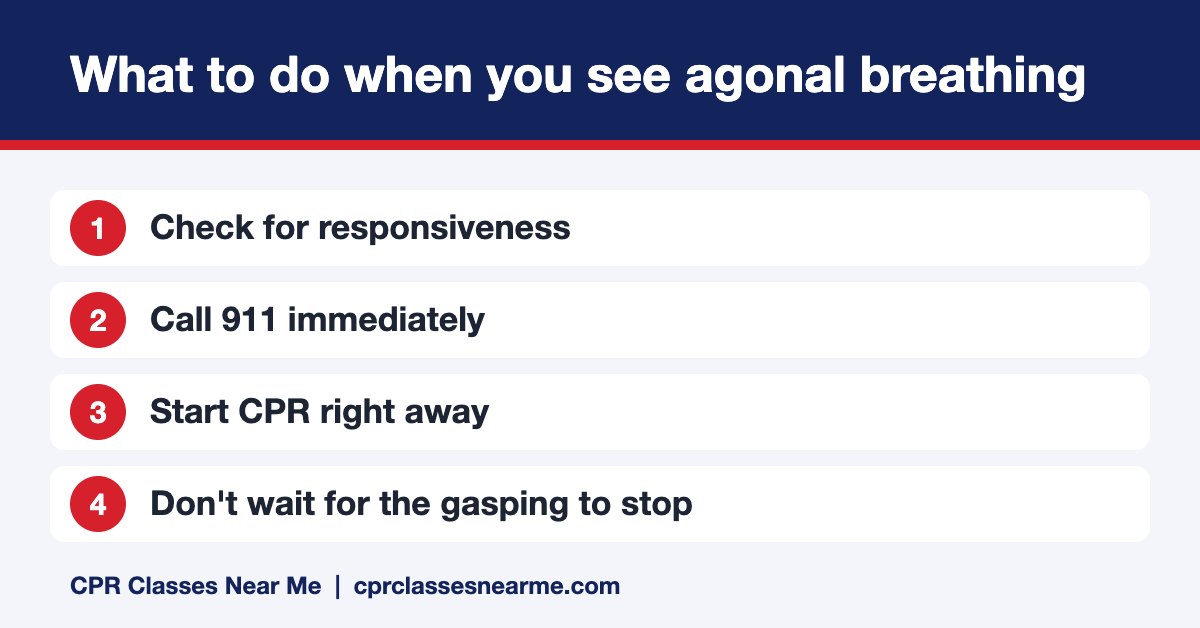
1. Check for responsiveness
Tap the person’s shoulder and shout, “Are you okay?” If they don’t respond, they’re unconscious.
2. Call 911 immediately
Tell the dispatcher the person is unresponsive and either not breathing or only gasping. Stay on the line. They’ll guide you through CPR if you need help.
3. Start CPR right away
Place your hands in the center of the chest. Push hard and fast. Don’t stop until help arrives or the person starts responding. If an AED is available, use it as soon as possible.
4. Don’t wait for the gasping to stop
Gasping may continue after you start CPR. Don’t stop to check on it. Keep compressions going until EMS takes over, the AED tells you to pause, or the person starts to move or breathe normally.
For situations where CPR should not be started, such as when a person has a valid Do Not Resuscitate order, see When Not to Perform CPR.
Common mistakes people make when they see agonal breathing
Agonal breathing trips people up. Here are the most common mistakes bystanders make, and why they’re dangerous:
Mistake 1: Assuming the person is breathing
Gasping looks like breathing, so people wait. They think the person is struggling but still getting air. They’re not. Start CPR.
Mistake 2: Waiting for the gasping to stop
Some bystanders think they should wait until the person stops gasping completely before starting CPR. By then, the brain has been without oxygen even longer. Start CPR as soon as you see gasping in an unresponsive person.
Mistake 3: Checking for a pulse instead of starting CPR
Pulse checks are unreliable for untrained bystanders. If the person is unresponsive and not breathing normally, skip the pulse check. Call 911 and start CPR.
Mistake 4: Only giving rescue breaths
Some people think the gasping means the person only needs help breathing. Rescue breaths alone can’t move blood when the heart has stopped. Chest compressions do that, so start with compressions.
Why training matters
Recognizing agonal breathing is one thing. Knowing how to respond confidently under pressure is another. Hands-on training gives you the muscle memory, confidence, and decision-making skills you need when someone’s life is on the line.
In a hands-on BLS CPR & AED class, you practice adult, child and infant CPR, rescue breaths and AED use on training manikins, and you learn how to check whether someone is breathing normally. That practice is what helps you act fast when seconds count.
Taking a CPR & First Aid class also prepares you for other emergencies, like severe bleeding, burns, stroke and severe allergic reactions. You get your AHA BLS eCard plus a separate First Aid card.
Disclaimer: This article provides general information and is not a substitute for hands-on CPR training or professional medical advice. Always call 911 in a medical emergency.
Final thoughts
Agonal breathing looks and sounds like the person is trying to breathe. But it’s not breathing. It’s a reflex that happens during cardiac arrest, and it means the person’s brain is not getting oxygen. Waiting for agonal breathing to improve or assuming the person will recover on their own is a dangerous mistake.
If you see someone collapse, check for responsiveness, and see gasping or irregular breathing, act immediately. Call 911. Start CPR. Keep going until help arrives. That’s how you save a life.
Get the training you need to recognize agonal breathing and respond with confidence. Find a location near you and sign up for an in-person BLS CPR & AED class today!