How to Renew Your CPR Certification in Austin, TX: The Step-by-Step Process

CPR Archives

No Comments

In the heart of Austin, TX, a city known for its vibrant culture and dynamic community, the ability to respond to a medical emergency is a skill that can truly make a difference. Cardiopulmonary Resuscitation (CPR) is a life-saving technique, and for many professionals and everyday citizens, holding a valid CPR certification is not just a good idea—it’s a requirement. However, these certifications don’t last forever. Most expire after two years, and letting your skills lapse is not an option.

Renewing your CPR certification is a crucial step to ensure you are always prepared to act in a cardiac or breathing emergency. It’s an opportunity to refresh your knowledge, update your techniques, and maintain the confidence needed to provide life-saving assistance. The process in Austin is straightforward, with a variety of options to fit your schedule and learning style. This comprehensive guide will walk you through everything you need to know, from understanding why renewal is important to choosing the right class and completing the final steps. By the end, you’ll have a clear roadmap to keep your certification current and your skills sharp.

Why CPR Certification Renewal is Non-Negotiable

A CPR certification is a testament to your ability to respond effectively in a crisis. But why is it so important to renew it? The simple answer is evolution. The field of emergency medicine is constantly advancing. Research leads to new insights, and protocols are updated to reflect the most effective methods for saving lives. What you learned two years ago may have been the gold standard, but today, there might be a more efficient or safer way to perform a rescue.

Renewing your certification ensures that your knowledge is up-to-date with the latest guidelines from leading organizations like the American Heart Association (AHA) and the American Red Cross. It’s not just about getting a new card; it’s about re-engaging with the material, practicing the skills, and solidifying your muscle memory. This renewed practice is what will allow you to act confidently and correctly in a high-stress situation. For many professionals, from healthcare providers to teachers, a current certification is also a legal or professional requirement. Maintaining it protects you and ensures you remain qualified for your role.

How to Renew Your CPR Certification in Austin, TX: The Step-by-Step Process
Understanding the CPR Certification Renewal Process

The process of renewing your CPR certification is designed to be efficient while still providing a thorough refresher. Unlike the initial certification, which often covers the basics from scratch, the renewal course focuses on reinforcing existing knowledge and introducing new information. The core elements remain the same: a cognitive portion and a skills check.

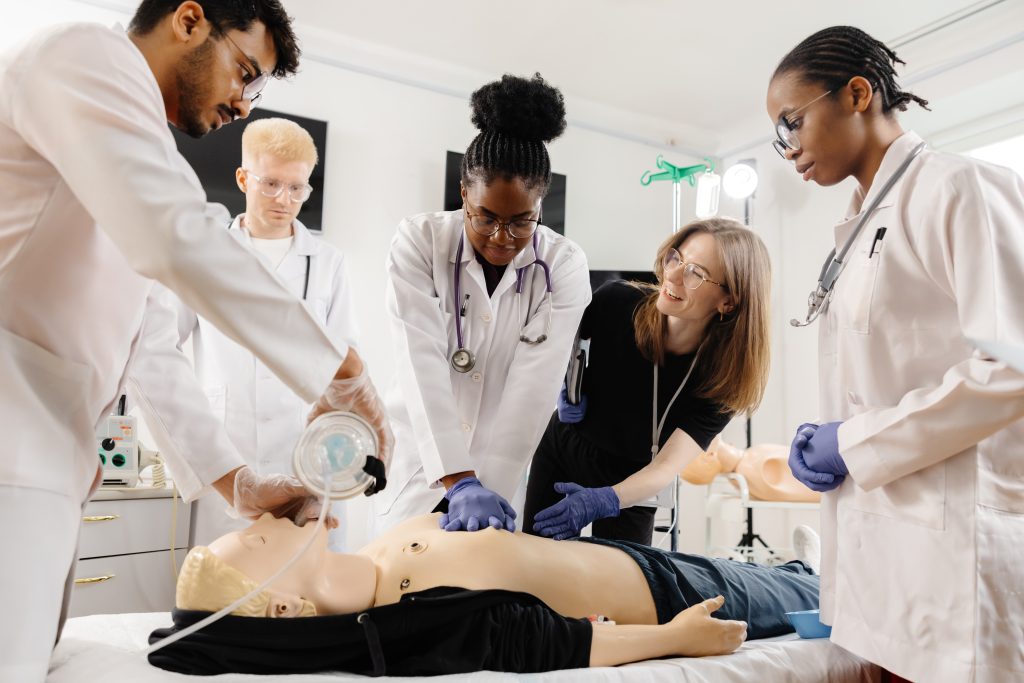
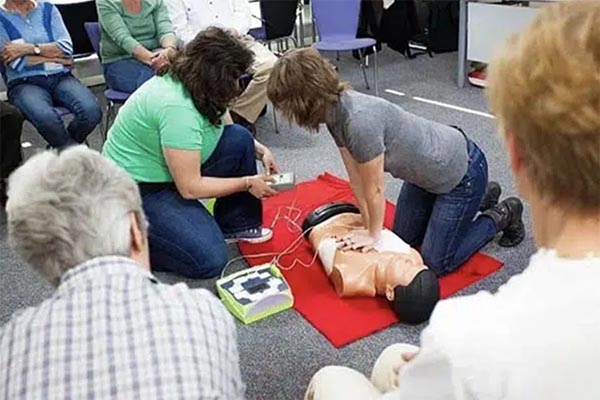
The cognitive portion can often be completed in a few hours, either in a traditional classroom setting or through an online module. This part of the training reviews critical topics such as the chain of survival, recognizing a cardiac arrest, and the proper sequence of compressions and breaths. The skills check is a hands-on component where you demonstrate your proficiency in performing CPR, using an AED (Automated External Defibrillator), and managing an obstructed airway. This is where your muscle memory is tested and fine-tuned under the guidance of a certified instructor.

The Step-by-Step Guide to Renewing Your Certification in Austin, TX

Renewing your CPR certification in Austin is a simple and accessible process. Follow these steps to ensure a smooth transition from your expiring card to a brand new one.

Step 1: Check Your Certification’s Expiration Date

The first and most important step is to know when your current certification expires. Most certifications are valid for two years. Set a reminder on your calendar for at least a month before the expiration date. This gives you plenty of time to find a class and complete the renewal process without any last-minute stress.

Step 2: Choose Your Renewal Format

CPR renewal courses come in a variety of formats to suit different needs. Your choice will depend on your schedule, learning style, and personal preference.

  • In-Person Classroom: This is the traditional method. You attend a class at a designated training facility in Austin with an instructor and other students. This format provides hands-on, direct feedback and allows for real-time interaction. It’s an excellent choice for those who prefer a structured, collaborative learning environment.
  • Online Course with a Skills Session: This is a blended learning approach. The cognitive portion of the course is completed online at your own pace. You watch videos, read materials, and take a written exam. Once the online portion is finished, you schedule a separate, short, in-person skills session with an instructor to demonstrate your hands-on proficiency. This is a highly flexible option for busy individuals.
  • Blended Learning with a Self-Service Manikin: Some providers offer an even more flexible blended option. The cognitive portion is still online, but the skills check is completed using a manikin at a designated kiosk. The manikin provides real-time feedback, and a webcam monitors your performance. This is a great choice if you have a non-traditional schedule.

Step 3: Find a Reputable Training Provider in Austin

Finding a quality training provider is essential. Look for a provider that offers courses from well-known and respected organizations like the American Heart Association (AHA) or the American Red Cross. These certifications are widely recognized and accepted. Check their class schedules and locations to find one that fits your needs. Ensure the instructors are certified and experienced.

Step 4: Register and Complete the Course

Once you have selected a provider and a class format, register for the course. Pay attention to the course type, there are specific classes for healthcare providers (BLS) and others for a general audience (Heartsaver). Be sure to choose the one that aligns with your professional or personal needs. Complete all required training components, including the cognitive learning and the hands-on skills check.

Step 5: Receive Your New Certification Card

After successfully completing all parts of the course and passing any required tests, you will be issued a new certification card. This card will be valid for another two years. In many cases, the card is issued digitally, so you will receive it via email. Be sure to save a digital copy and print a physical one if needed.

The Role of Practical Skills in CPR Renewal

While the cognitive review is important, the hands-on skills session is the most critical part of the renewal process. During this session, you will be asked to demonstrate your ability to perform compressions at the correct depth and rate, deliver rescue breaths, and operate an AED. An instructor will observe your technique and provide feedback. This is a low-pressure environment designed to help you correct any bad habits that may have developed over time.

For example, you might be over-compressing or not allowing for full chest recoil. The instructor can spot these issues and guide you to perform the skills correctly. This practical application ensures that when faced with a real emergency, your movements will be accurate and effective. This is why a fully in-person or a blended course with a skills session is the best way to renew your certification. Relying solely on a knowledge test is not sufficient to maintain the life-saving physical skills required for CPR.
The Different Types of CPR Certification to Renew

The Different Types of CPR Certification to Renew

It’s important to know the difference between the main types of CPR certifications. The one you need to renew depends on your profession.

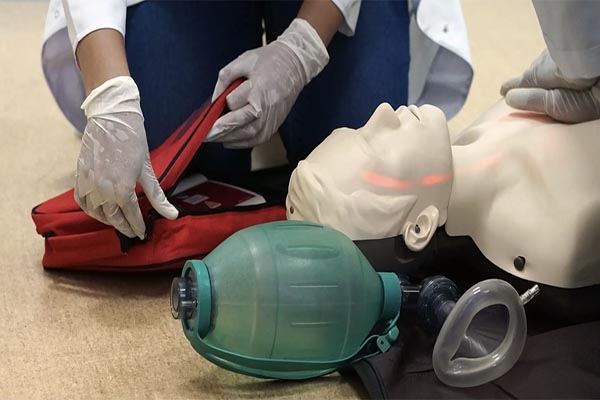
  • Basic Life Support (BLS): This certification is specifically for healthcare professionals. It covers advanced topics and is more in-depth than a standard CPR course. If you are a doctor, nurse, EMT, or work in a medical facility, this is the course you need to renew.
  • CPR/AED (Heartsaver): This is a general public course. It is designed for non-healthcare professionals such as teachers, coaches, lifeguards, fitness instructors, or anyone who wants to learn life-saving skills. This is the right choice for most people who do not work in a medical setting.
  • First Aid: Often combined with a CPR/AED course, this certification covers how to handle common injuries and medical emergencies like burns, fractures, and allergic reactions. If your job requires a First Aid certification as well, you can often find a combined course to renew both simultaneously.

Conclusion

Renewing your CPR certification in Austin, TX is a proactive and responsible choice. It ensures that you are always ready to act in a medical emergency, armed with the most current knowledge and skills. The process is designed for convenience and effectiveness, with a range of options from traditional classroom settings to flexible blended learning. Don’t let your certification lapse. Take the initiative to refresh your skills and maintain your readiness to save a life. The peace of mind that comes with being prepared is invaluable, both for you and for those you might one day help.

Are you ready to renew your CPR certification in Austin, TX? Don’t wait until it’s too late. Contact CPR Classes Near Me today to find the perfect class for your needs and get started on your renewal journey. Stay certified, stay prepared, and stay ready to make a difference.

FAQs about CPR Recertification in Austin, TX

1. How often do I need to renew my CPR certification?

Most CPR certifications are valid for two years. It is recommended to renew your certification before it expires to ensure you have no lapse in your qualifications.

2. Can I renew my CPR certification online?

Yes, you can. Many providers, including those from the American Heart Association and the American Red Cross, offer a blended learning format. This allows you to complete the cognitive portion of the course online at your convenience. However, a hands-on skills session with a certified instructor is always required to complete the renewal process.

3. What is the difference between an initial CPR course and a renewal course?

An initial CPR course is designed for individuals who have never been certified before. It covers all the basic concepts and skills from the beginning. A renewal course is specifically for those with a current or recently expired certification. It focuses on refreshing knowledge, reviewing skills, and updating participants on the latest guidelines, making it shorter and more focused than an initial course.

4. What happens if my CPR certification expires?

If your CPR certification expires, you may be required to take a full initial certification course again, depending on the provider and the length of time since expiration. It’s always best to renew before the expiration date to avoid this.

5. How long does a CPR renewal class take?

The duration of a CPR renewal class varies depending on the format. An in-person class typically lasts a few hours. A blended learning course’s online portion can be completed at your own pace, and the in-person skills session is usually much shorter, often under an hour.
The Power of the AED: Understanding Automated External Defibrillators

CPR Archives

No Comments

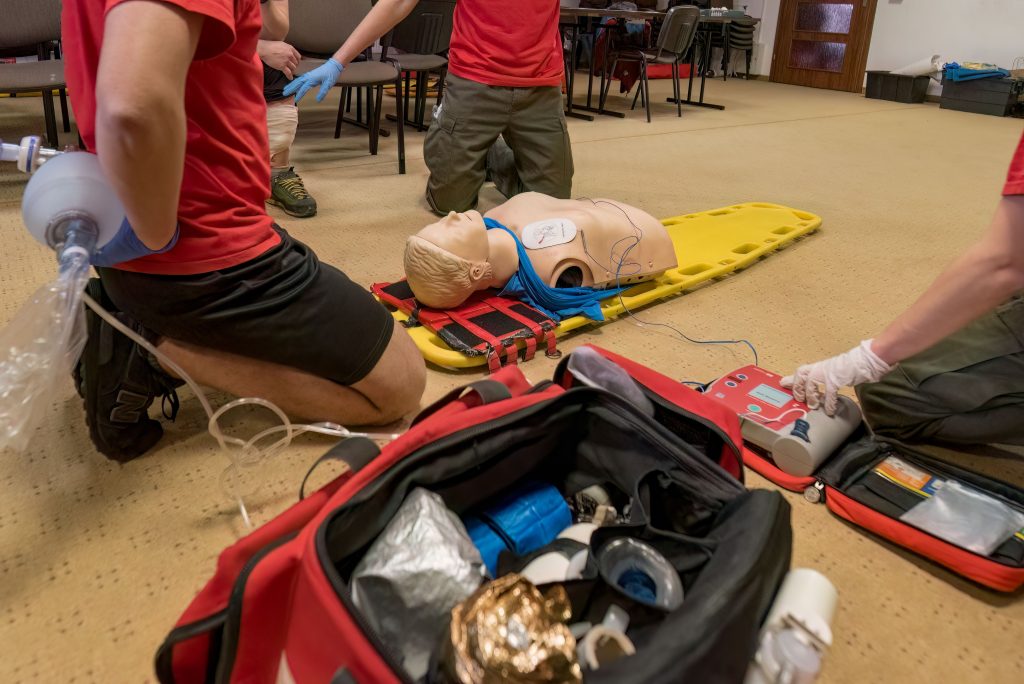
In the face of a medical emergency, every second counts. While many people are familiar with the concept of CPR, the role of another critical device, the Automated External Defibrillator (AED), is often less understood. Yet, for someone experiencing sudden cardiac arrest, the AED is the definitive treatment that can restore a normal heart rhythm. These portable, user-friendly devices are a key pillar in the emergency response to save a life. Understanding what an AED is, how it works, and its vital role is the first step toward being prepared to act when it matters most.

This comprehensive guide will demystify the AED, empowering you with the knowledge needed to recognize its importance and use it confidently. We will explore its mechanics, its relationship with CPR, and its place in the crucial Chain of Survival. You’ll learn the difference between a heart attack and sudden cardiac arrest and discover why AEDs are the only way to treat the latter. By the end, you’ll see why learning to use an AED is one of the most impactful skills you can acquire.

The Electrical Problem: Sudden Cardiac Arrest vs. Heart Attack

To truly appreciate the role of an AED, it’s essential to understand what it is designed to treat. Sudden cardiac arrest (SCA) is an electrical problem. It happens when the heart’s electrical system malfunctions, causing it to beat erratically and inefficiently, or to stop completely. This chaotic rhythm, often ventricular fibrillation (VF), prevents the heart from pumping blood to the brain, lungs, and other vital organs. A person in SCA will collapse, become unresponsive, and stop breathing normally.

This is a stark contrast to a heart attack, which is a circulation problem. A heart attack occurs when a blockage in an artery cuts off blood flow to a part of the heart muscle. While a heart attack can sometimes trigger a sudden cardiac arrest, they are not the same. A person having a heart attack is typically conscious and breathing, although they may experience chest pain or other symptoms. An AED should only be used on a person who is unconscious and not breathing normally.

The Power of the AED: Understanding Automated External Defibrillators

How an AED Works: A Simple, Life-Saving Process

The AED’s function is straightforward, yet incredibly sophisticated. It’s a computerized device that delivers a targeted electrical shock to the heart to reset its rhythm. The entire process is designed to be used by bystanders, even those with minimal training.

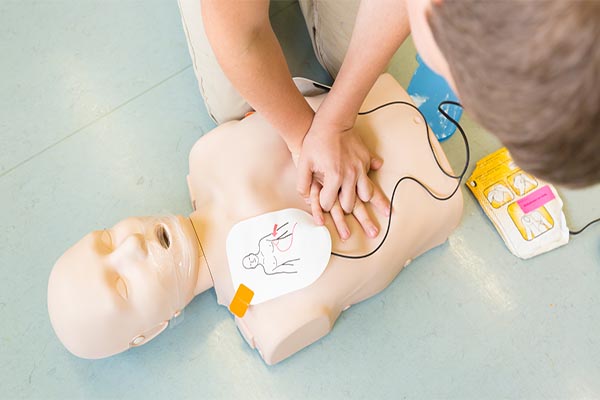
  1. Analysis: When the AED’s pads (electrodes) are placed on the person’s bare chest, the device analyzes the heart’s electrical activity.
  2. Assessment: The AED’s internal computer determines if the heart’s rhythm is “shockable,” meaning it is in a state of ventricular fibrillation or pulseless ventricular tachycardia. It will not deliver a shock if it detects a normal rhythm or no electrical activity at all.
  3. Instruction: If a shock is advised, the device will provide clear voice prompts, instructing the user to “stand clear” and press the shock button. This safety feature ensures no one is touching the person when the shock is delivered.
  4. Defibrillation: A controlled electrical current is sent through the pads, traveling to the heart. This powerful shock is intended to stop the chaotic electrical activity, giving the heart a chance to restart with a normal, effective rhythm.

The AED is a “smart” device, it will only deliver a shock when necessary. This built-in safety measure means that an untrained person cannot accidentally harm someone by using it incorrectly.

The Critical Partnership: CPR and AEDs

The best chance of survival for a person in sudden cardiac arrest comes from a combination of early CPR and early defibrillation with an AED. This powerful duo works hand-in-hand to keep the victim alive until professional medical help arrives.

  1. CPR as a Bridge: When the heart stops, CPR keeps oxygenated blood circulating to the brain and other vital organs. It’s a temporary measure that buys valuable time. For every minute that passes without CPR and defibrillation, the chances of survival decrease by approximately 7-10%.
  2. AED as the Fix: While CPR keeps the body sustained, it cannot correct the underlying electrical problem. Only a defibrillation shock from an AED can do that. Therefore, the moment an AED becomes available, it should be used immediately.
  3. Guided Synergy: Modern AEDs are designed to guide the rescuer through the entire process. After an analysis or a shock, the AED will often prompt the user to continue chest compressions, providing a metronome or voice cues to maintain the correct rate. The device and the rescuer work together to provide the best possible care.

This synergy highlights why formal training is so important. A comprehensive CPR and AED certification course teaches you how to recognize the signs of cardiac arrest, when to call for emergency services, how to perform effective CPR, and how to operate an AED without hesitation.

Types of AEDs: Public vs. Professional

AEDs are categorized based on their intended use and level of automation. The two main types you will encounter are designed for different environments and users.

  • Public Access AEDs: These are the most common type found in public places like airports, schools, gyms, and office buildings. They are specifically designed for use by laypeople with minimal or no training. They feature loud, clear voice prompts that guide the user through every step, from placing the pads to delivering a shock. They are typically fully automated or semi-automated.
  • Professional Use AEDs: These devices are more advanced and are used by trained medical professionals, such as paramedics and hospital staff. They often include additional features like an ECG display, allowing the rescuer to monitor the heart’s rhythm more closely. These devices may also have a manual override function, giving trained professionals more control over the shock delivery.

Within the public access category, there are two common sub-types:

  • Fully Automated AEDs: Once the pads are correctly attached to the victim, this type of AED will automatically analyze the heart rhythm and deliver a shock if one is needed, without any user intervention beyond pressing a button to turn it on.
  • Semi-Automated AEDs: These devices analyze the rhythm and advise the user if a shock is necessary. However, they require the user to press a designated “shock” button to deliver the electrical current. This is the most common type found in public spaces.

The user-friendly design of public access AEDs is a testament to the idea that anyone can be a lifesaver. The goal is to make these devices so intuitive that hesitation is removed from the emergency equation.

Legal Protections: Good Samaritan Laws

A common concern for bystanders is the legal risk of providing help in an emergency. However, most countries and states have “Good Samaritan” laws in place to protect individuals who act in good faith to help a person in an emergency. These laws provide immunity from liability for civil damages for those who use an AED to assist a victim of cardiac arrest, as long as they act reasonably and without gross negligence. The protection offered by these laws, combined with the safety features of modern AEDs, should give a potential rescuer confidence to act.

These legal protections exist because the benefits of immediate action far outweigh the risks. The time-sensitive nature of sudden cardiac arrest means that doing nothing is the most dangerous option. A person who is not breathing and has no pulse is in a state of cardiac arrest, and the use of an AED is their only chance for survival.

The Chain of Survival: Putting It All Together

The Chain of Survival: Putting It All Together

The American Heart Association’s Chain of Survival is a recognized framework for responding to cardiac arrest. It highlights the sequence of actions that maximize the chance of a positive outcome.

  • Link 1: Early Recognition and Activation: Recognizing the signs of cardiac arrest and immediately calling 911 or the local emergency number.
  • Link 2: Early CPR: Starting chest compressions and rescue breaths immediately to maintain blood flow.
  • Link 3: Early Defibrillation: Using an AED as soon as it becomes available to deliver a life-saving shock.
  • Link 4: Early Advanced Life Support: The arrival of emergency medical services (EMS) to provide advanced medical care and transport the person to a hospital.
  • Link 5: Post-Cardiac Arrest Care: Ongoing medical treatment in a hospital setting.

The AED is a crucial link in this chain, bridging the gap between bystander CPR and the arrival of professional help. Without it, the chances of survival for someone in ventricular fibrillation are drastically low.

Conclusion: Your Call to Action

The Automated External Defibrillator is more than just a piece of medical equipment; it is a beacon of hope in a life-threatening situation. Its simplicity, combined with its profound effectiveness, makes it a powerful tool for anyone who wishes to be prepared to save a life. The knowledge that a person is protected by Good Samaritan laws and that the AED will only shock if necessary should instill confidence in any potential rescuer.

By understanding the vital role of the AED and how it works in tandem with CPR, you can become an active participant in the Chain of Survival. The best way to build this confidence and acquire these critical skills is through formal training.

Don’t wait for an emergency to learn. Contact CPR Classes Near Me today to find a course and gain the skills to become a lifesaver.

FAQs about AEDs

Q1: What does AED stand for?

A: AED stands for Automated External Defibrillator. The “automated” part refers to its ability to automatically analyze a heart rhythm and decide if a shock is needed. The “external” part means that the device delivers the shock from outside the body, through pads placed on the chest.

Q2: Can I harm someone by using an AED on them?

A: No, you cannot harm someone by using an AED on them. The AED is a “smart” device with built-in safety features. It will only deliver an electrical shock if it detects a heart rhythm that requires defibrillation (ventricular fibrillation or pulseless ventricular tachycardia). If the person has a pulse or a normal rhythm, the AED will not advise or deliver a shock.

Q3: Do I need special training to use an AED?

A: While AEDs are designed to be used by bystanders with no training, formal training is highly recommended. A CPR and AED certification course teaches you how to recognize the signs of sudden cardiac arrest, when to call for emergency services, how to prepare the person’s chest for the pads, and how to follow the AED’s voice prompts confidently. Training reduces hesitation and improves the effectiveness of the response.

Q4: Can an AED be used on a child or an infant?

A: Yes, AEDs can be safely used on children and infants. Most AEDs come equipped with special pediatric pads or a child/infant mode that reduces the energy level of the shock to an appropriate level for smaller bodies. If pediatric pads are not available and the child is over eight years old or 55 pounds, adult pads can be used, following the manufacturer’s instructions. In an emergency, using an AED with adult pads is better than not using one at all.

Q5: Will an AED save everyone who is in cardiac arrest?

A: An AED will not save every person in cardiac arrest. It is specifically designed to treat sudden cardiac arrest caused by ventricular fibrillation. If the heart has stopped completely (a condition called asystole), or if the cardiac arrest is caused by an underlying issue that is not a shockable rhythm, the AED will not deliver a shock. However, for a person in a shockable rhythm, the AED is their only chance for survival. The device significantly increases the chances of survival from SCA.

Q6: What is the difference between a heart attack and sudden cardiac arrest?

A: A heart attack is a plumbing problem; it’s when a blockage in a coronary artery stops blood flow to a part of the heart. The person is usually awake and may complain of symptoms like chest pain. Sudden cardiac arrest is an electrical problem; the heart’s electrical system malfunctions, causing it to stop beating effectively. The person becomes unresponsive and stops breathing normally. A heart attack can lead to SCA, but they are not the same.

Choking Emergency: Your Guide to Life-Saving Relief in Austin

CPR Archives

No Comments

Imagine you’re enjoying a meal at one of Austin’s fantastic restaurants. Suddenly, someone at a nearby table starts to struggle, clutching their throat. A moment of panic sets in. What do you do? This isn’t just a scene from a movie; it’s a real-life emergency that happens more often than you might think. Knowing how to respond can be the difference between life and death.

Choking is a critical medical emergency where a person’s airway is blocked, either partially or completely, by a foreign object. It’s an issue that can affect anyone, regardless of age, and requires an immediate and decisive response. The seconds that follow are crucial. While paramedics are on their way, the actions of a bystander, someone like you, are the first and most vital link in the chain of survival. This guide will walk you through the essential steps to take during a choking emergency right here in Austin, TX.

Understanding the Signs of Choking

Recognizing a choking emergency is the first step toward providing help. The signs can vary, but there are some common indicators you should look for. A person who is mildly choking may still be able to cough forcefully or speak. This is a sign of a partial airway obstruction, and you should encourage them to continue coughing, as this is often the most effective way to clear the blockage. However, a severe, or complete, airway obstruction is a much more serious situation.

A person with a severe airway obstruction cannot speak, cough, or breathe. They may make high-pitched noises or no sound at all. Their face may turn blue or gray, a condition known as cyanosis, due to a lack of oxygen. The universal sign for choking, which is a person clutching their throat with one or both hands, is a clear signal that something is wrong. In an emergency, every second counts. Your immediate action can prevent a tragic outcome.

Choking Emergency: Your Guide to Life-Saving Relief in Austin

The Life-Saving Heimlich Maneuver (Abdominal Thrusts)

The Heimlich maneuver, also known as abdominal thrusts, is the standard first-aid procedure for an adult or child who is severely choking. It’s a series of quick, upward pushes to the abdomen designed to create an artificial cough that can dislodge the object. The technique is a powerful tool in your first-aid arsenal, but it must be performed correctly to be effective and safe.

To perform the Heimlich maneuver on an adult, first, stand behind the person and wrap your arms around their waist. Make a fist with one hand and place it just above their navel. Grasp your fist with your other hand. Deliver five quick, upward thrusts into the person’s abdomen. The goal is to create a forceful pressure that pushes the object out of their airway. Continue these thrusts until the object is dislodged or the person becomes unresponsive.

If you are alone and choking, you can perform the Heimlich maneuver on yourself. Make a fist with one hand and place it above your navel. Grab your fist with your other hand. Then, lean over a firm object, such as a countertop or chair, and thrust your abdomen against it. This self-help technique can be a lifesaver when no one else is around to assist.

Adjusting Your Approach for Pregnant Women and Obese Individuals

Standard abdominal thrusts can be dangerous for a pregnant woman or a person who is obese. In these cases, you should use chest thrusts instead. To perform chest thrusts, stand behind the person and place your arms under their armpits, wrapping them around their chest. Place the thumb side of your fist on the center of the breastbone. Grab your fist with your other hand. Deliver five quick inward and firm thrusts. Continue these thrusts until the object is dislodged or the person becomes unresponsive.

This modified technique provides a safer way to create the necessary force to dislodge the object without causing injury to the person or, in the case of a pregnant woman, the fetus. It’s an essential adaptation to the standard Heimlich maneuver that everyone should be aware of, as you never know when you might need to help someone with a unique physical condition. Knowing the right technique is just as important as knowing how to react.

Choking in Infants: A Delicate and Urgent Situation

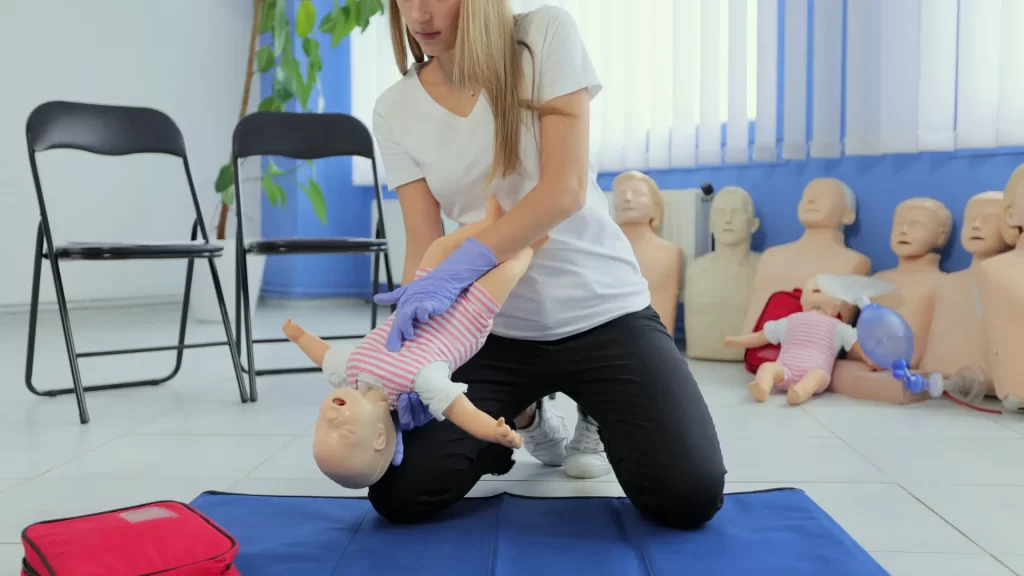
A choking emergency in an infant requires a different set of techniques. The tiny airways of babies are easily obstructed, and their fragile bodies must be handled with care. If you suspect an infant is choking, first look inside their mouth for the object. If you can see it, try to sweep it out carefully with one finger, but be cautious not to push it further down the throat. If you cannot see the object, or cannot remove it, you must proceed with back blows and chest thrusts.

Hold the infant face down along your forearm with their head lower than their chest. Support the infant’s head and neck with your hand. Deliver five quick and firm back blows between their shoulder blades using the heel of your hand. After the back blows, turn the infant face up on your other forearm. Place two fingers on the center of their chest, just below the nipple line. Deliver five quick and firm chest thrusts. Continue alternating between five back blows and five chest thrusts until the object is dislodged or the infant becomes unresponsive.

Remember, never perform abdominal thrusts on an infant as this can cause severe injury. The combination of back blows and chest thrusts is the safest and most effective method for clearing an infant’s airway. The ability to perform this technique confidently and correctly is a truly invaluable skill. It’s an act of love and care that can save a life.

When to Begin CPR

A choking emergency can escalate quickly. If a person, whether an adult, child, or infant, becomes unresponsive, their body has been deprived of oxygen for too long. At this point, the next step is to begin CPR. You should also call 911 or have someone else do so immediately. The first-aid response for choking transitions from clearing the airway to supporting life functions.

To begin CPR on an unresponsive choking victim, start with chest compressions. The goal is to circulate oxygenated blood to the brain and other vital organs. You should perform high-quality chest compressions at a rate of 100 to 120 compressions per minute. After 30 compressions, open the person’s airway and look for the object. If you see it, remove it. If not, give two rescue breaths. Continue this cycle of 30 compressions and two breaths until emergency medical services arrive or the person begins to show signs of life.

The transition from choking relief to CPR is a critical one. It highlights the interconnectedness of first-aid skills. Your ability to provide immediate and appropriate care is paramount. It’s why certified training is so important. A CPR-certified individual understands not only how to perform these techniques but also when to use them and how to seamlessly move from one to the next as the situation demands.

The Importance of Professional CPR Certification

The Importance of Professional CPR Certification

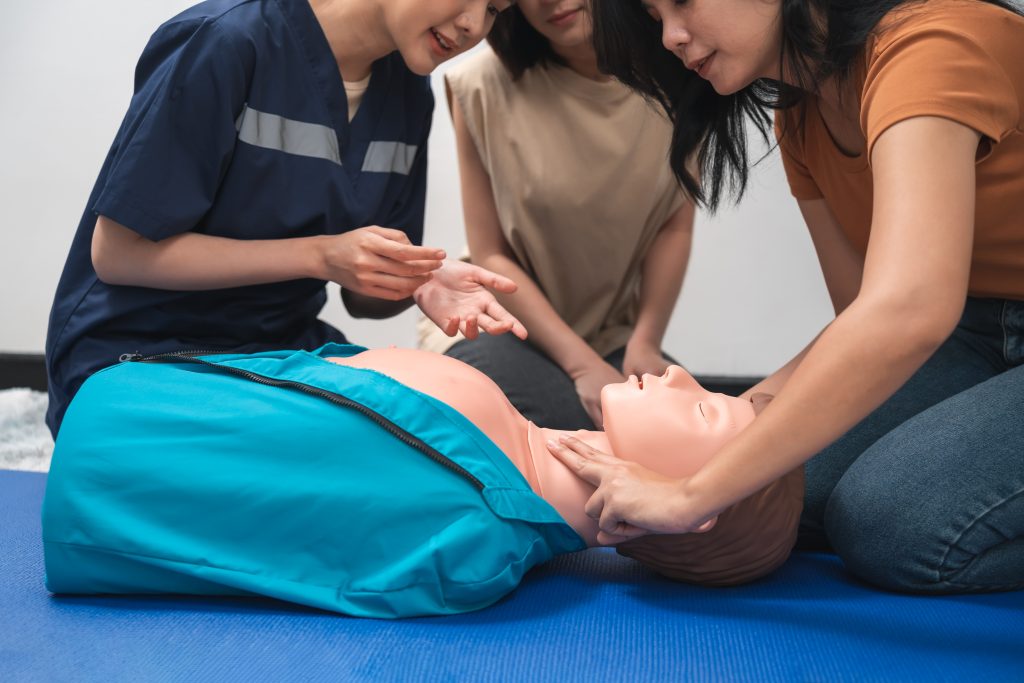
While reading this guide gives you a foundational understanding of choking relief techniques, nothing replaces the hands-on training and expert guidance you receive from a professional CPR certification course. In a controlled class setting, you can practice these life-saving skills on manikins, gaining the muscle memory and confidence required to act decisively in a real-world emergency. An instructor can provide real-time feedback, ensuring you are performing each technique correctly.

CPR classes cover more than just choking relief. They teach you how to recognize and respond to cardiac arrest, stroke, and other medical emergencies. They provide you with a comprehensive skill set that can empower you to become a true first responder in your community. A certification card is more than just a piece of paper; it’s a symbol of your commitment to helping others and a testament to your ability to remain calm and effective under pressure.

Being prepared to act in an emergency isn’t just about knowing what to do; it’s about having the confidence to do it. A CPR certification gives you that confidence. In Austin, TX, there are many opportunities to get certified and learn these vital skills. Don’t wait until an emergency happens to wish you were prepared.

Conclusion

Knowing what to do when a person is choking is a vital skill. Whether it’s a family member, a friend, or a stranger, your immediate and correct action can change the course of an emergency. This guide has provided you with the foundational knowledge of choking relief techniques for adults, children, and infants. However, real-world proficiency comes from hands-on training.

Don’t just be a witness to an emergency; be the person who can step in and make a difference. Taking a CPR certification course will empower you with the skills and confidence to act decisively. If you live in or around Austin, now is the perfect time to get certified.

Are you ready to learn these life-saving skills? Contact CPR Classes Near Me today to schedule your certification course and become a life-saver in your community.

Frequently Asked Questions (FAQ)

Q: What is the most common cause of choking?

A: The most common cause of choking is a foreign object, typically food, that becomes lodged in the throat or windpipe, blocking the flow of air. For adults, this often occurs while eating or drinking. For children and infants, choking can be caused by small toys, coins, or other household items.

Q: How do I know the difference between a mild and a severe choking emergency?

A: A person with a mild airway obstruction can still cough forcefully and may be able to speak. You should encourage them to keep coughing to try and clear the obstruction on their own. A person with a severe airway obstruction cannot cough, speak, or breathe. They may also turn blue in the face and make high-pitched noises or no sound at all. This is when immediate intervention is needed.

Q: Is it safe to perform the Heimlich maneuver on a pregnant woman?

A: No, the standard Heimlich maneuver (abdominal thrusts) is not recommended for pregnant women or obese individuals as it can cause injury. Instead, you should perform chest thrusts. This involves wrapping your arms around the person’s chest and delivering quick, inward thrusts to their breastbone until the object is dislodged or they become unresponsive.

Q: When should I start CPR on a choking victim?

A: You should begin CPR immediately if the choking victim becomes unresponsive. This indicates that they are no longer breathing, and their heart may have stopped. Call 911 immediately and begin chest compressions and rescue breaths. Continue this until emergency medical services arrive or the person shows signs of life.

Q: Where can I get CPR certified in Austin, TX?

A: You can get CPR certified by taking a professional course. These classes are offered by various organizations and provide hands-on training with expert instructors. To find a class near you, simply search for “CPR Classes Near Me” and contact a reputable provider to schedule your training.