
Watching someone have a seizure can feel overwhelming. Their body may stiffen and jerk, and they can’t respond to you. The good news: your job is simple. Keep them safe, time the seizure, and know when to call 911.
What a seizure can look like
Not every seizure looks the same. Some people fall and have jerking movements of the arms and legs. Others stare blankly, chew, pick at their clothes or seem confused. A seizure happens when there’s a sudden burst of abnormal electrical activity in the brain.
This article focuses on seizures with stiffening and jerking, where first aid matters most.
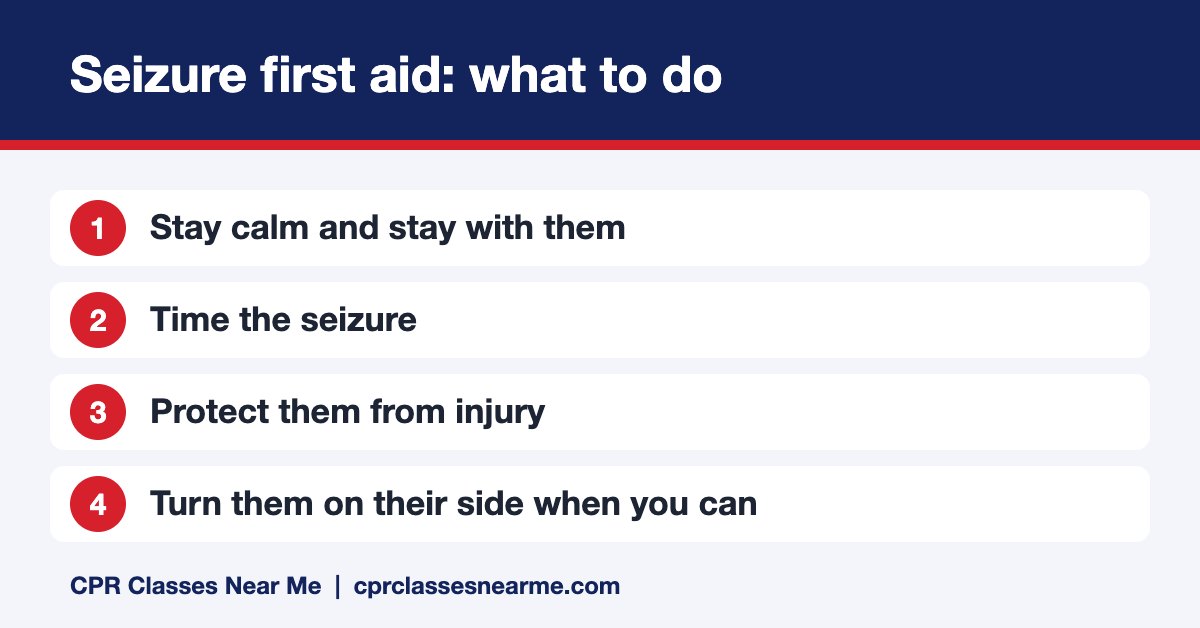
Seizure first aid: what to do
Stay calm and stay with them
Most seizures stop on their own. Stay with the person until it ends and they are fully awake.
Time the seizure
Check the time when it starts. How long it lasts helps you decide whether to call 911, and EMS will want to know.
Protect them from injury
- Ease them to the floor if they’re standing or sitting.
- Move hard or sharp objects away.
- Put something soft and flat, like a folded jacket, under their head.
- Remove their glasses and loosen anything tight around the neck.
Turn them on their side when you can
Once the jerking slows or stops, gently roll them onto their side. This helps keep the airway clear and lets saliva or vomit drain out.
What not to do during a seizure
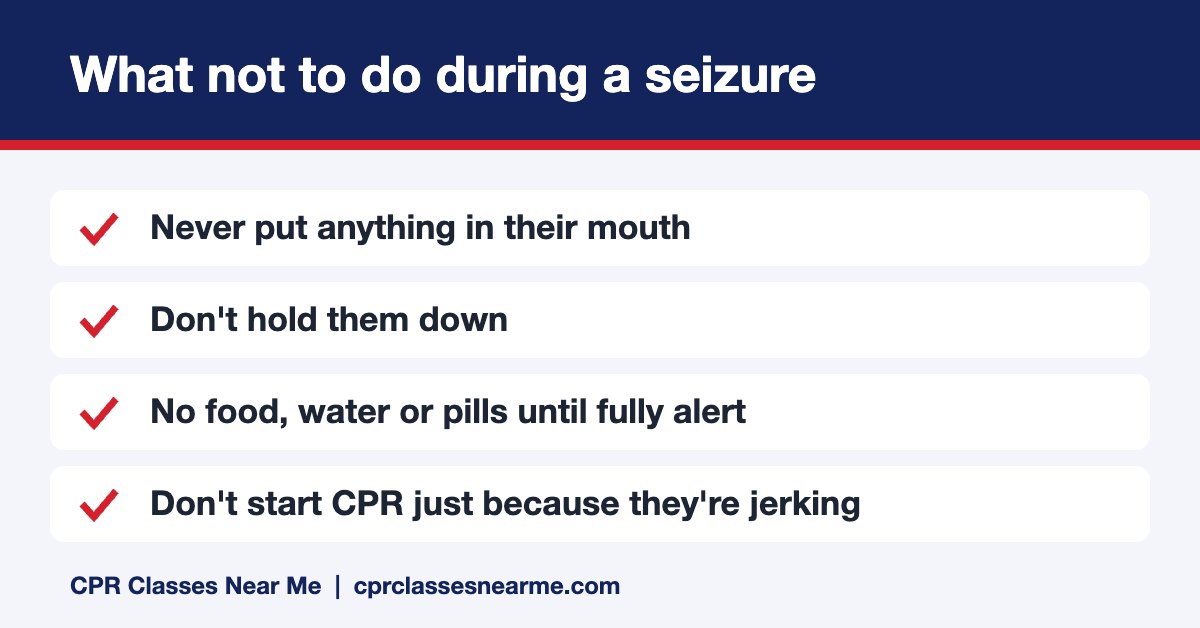
- Never put anything in their mouth. A person can’t swallow their tongue. Objects in the mouth can break teeth or block the airway, and your fingers can get bitten.
- Don’t hold them down. Trying to stop the movements can injure them or you.
- Don’t give food, water or pills until they’re fully awake and alert.
- Don’t start CPR during the seizure just because they’re jerking. Check breathing once the seizure stops.
When to call 911
Call 911 if:
- The seizure lasts longer than 5 minutes
- Another seizure starts soon after the first
- The person doesn’t wake up after the seizure ends
- They have trouble breathing or aren’t breathing normally afterward
- It’s their first seizure, or you don’t know their history
- The seizure happened in water
- They are injured, pregnant or have diabetes
If you aren’t sure, call. The dispatcher can talk you through it.
After the seizure ends
- Check breathing. If they don’t respond and aren’t breathing normally, call 911 and start CPR.
- Use the recovery position. If they’re breathing normally but still drowsy, keep them on their side. See How to Put Someone in the Recovery Position (And When Not To).
- Talk to them calmly. People are often confused, tired or embarrassed after a seizure. Tell them what happened and that help is on the way if you called.
- Stay until they’re fully alert, or until EMS or someone they know takes over.
- Check for injuries from the fall.
Seizure action plans
Some people with epilepsy carry a seizure action plan or wear a medical ID. If you see one, follow it. It may tell you when to call 911 or about rescue medication their doctor prescribed. Only give medication if you know how and the plan says to.
Feel ready, not rattled
Seizure first aid is mostly about staying calm and keeping the person safe. Practicing first aid skills with an instructor makes it much easier to act when it’s real. Take an in-person BLS CPR & AED class so you’re ready if someone stops breathing normally, or choose the First Aid + AHA BLS CPR & AED class to add skills like bleeding control and burn care.
See CPR & First Aid Classes and find a location near you.
This article is general information. It is not a substitute for hands-on training or medical advice. In an emergency, call 911.